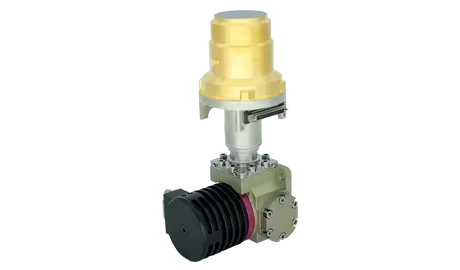
Infrared cameras have become indispensable tools in security surveillance, industrial monitoring, search and rescue, and many other fields, with their detection range being one of the most critical performance indicators. The detection range of an infrared camera refers to the maximum distance at which it can clearly identify and distinguish a target, and it is not a fixed value—it is affected by a variety of factors. Understanding these core factors is crucial for selecting the right infrared camera, optimizing thermal imaging performance, and ensuring that it meets the needs of specific application scenarios.
Infrared Lens: The Core Component Determining Detection Range
The infrared lens is the most direct and important factor affecting the detection range of an infrared camera, as it is responsible for collecting and focusing infrared radiation emitted by targets. The performance and parameters of the infrared lens directly determine how far the camera can "see" and how clearly it can capture target details.
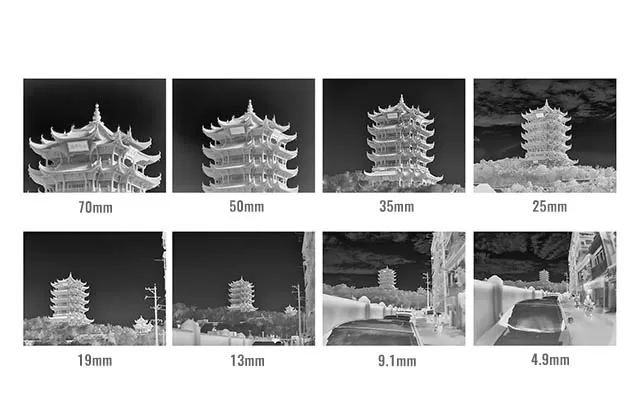
First, the focal length of the infrared lens is a key parameter. A longer focal length means the lens can concentrate more infrared radiation from distant targets, thereby extending the detection range. For example, an infrared lens with a focal length of 100mm will have a much longer detection range than a lens with a 25mm focal length, as it can magnify distant targets more effectively. However, a longer focal length also means a narrower field of view, which is a trade-off that needs to be considered based on application needs.
Second, the aperture size of the infrared lens affects the amount of infrared radiation entering the camera. A larger aperture (smaller f-number) allows more infrared light to pass through, enhancing the camera's sensitivity to faint thermal signals from distant targets, thus improving the detection range. In low-visibility environments or when detecting small, low-temperature targets, a large-aperture infrared lens can significantly improve the detection performance of the infrared camera.
Additionally, the optical quality of the infrared lens (such as lens material, coating technology, and aberration correction) also impacts the detection range. High-quality infrared lenses with advanced coating technology can reduce the reflection and absorption of infrared radiation, ensuring that more effective signals reach the detector, thereby maintaining clear thermal imaging even at long distances.
Detector Performance: The "Heart" of Thermal Imaging and Detection Range
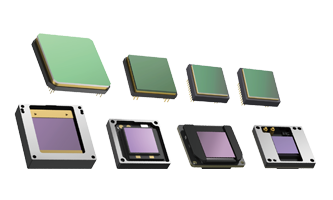
The detector of an infrared camera is responsible for converting the focused infrared radiation into electrical signals, which are then processed into visible thermal imaging. The performance of the detector directly determines the camera's sensitivity to thermal signals, which in turn affects the detection range.
The key parameter of the detector is thermal sensitivity (also known as NETD, Noise Equivalent Temperature Difference). A lower NETD means the detector can detect smaller temperature differences, enabling it to capture faint thermal signals from distant targets that have weak thermal radiation. For example, an infrared camera with a NETD of 10 mK will have a longer detection range than one with a NETD of 20 mK, as it can distinguish targets from the background more effectively.
Another important factor is the pixel resolution of the detector. A higher pixel resolution means the detector can capture more detailed thermal information, allowing the infrared camera to distinguish smaller targets at longer distances. For instance, a 640×480 pixel detector can identify smaller targets at a given distance compared to a 320×240 pixel detector, thus extending the practical detection range.
Furthermore, the type of detector (cooled vs. uncooled) also affects the detection range. Cooled infrared detectors, which are often used in medium wave infrared (MWIR) cameras, have higher thermal sensitivity and lower noise, making them suitable for long-range detection. Uncooled detectors, commonly used in long wave infrared (LWIR) cameras, are more cost-effective and portable but have slightly lower sensitivity, which may limit their detection range in some scenarios.
Target Characteristics: The "Object" of Detection That Influences Range
The characteristics of the target itself play a significant role in determining the detection range of an infrared camera. Even with the same infrared camera and lens, the detection range can vary greatly depending on the target's properties.
The most important target characteristic is target temperature. Infrared cameras detect thermal radiation emitted by objects, and hotter objects emit more intense infrared radiation, which can be detected at longer distances. For example, a high-temperature target (such as a jet engine or a fire) can be detected at a much longer range than an ambient-temperature target (such as a human body or a vehicle), as it emits stronger thermal signals.
The target size also affects the detection range. Larger targets have a larger surface area, emitting more infrared radiation and being easier to distinguish from the background at long distances. A small target (such as a small animal or a small component) will have a shorter detection range than a large target (such as a vehicle or a building) with the same temperature.
Additionally, the emissivity of the target (the ability to emit infrared radiation) impacts the detection range. Targets with high emissivity (such as dark-colored objects, human skin, or rough surfaces) emit more infrared radiation, making them easier to detect at longer distances. In contrast, targets with low emissivity (such as polished metal surfaces) reflect more infrared radiation and emit less, reducing the detection range.
In summary, the detection range of an infrared camera is comprehensively affected by several factors: infrared lens parameters (focal length, aperture, optical quality), detector performance (thermal sensitivity, pixel resolution, detector type), target characteristics (temperature, size, emissivity), environmental conditions (atmospheric conditions, background temperature). To maximize the detection range of an infrared camera, it is necessary to select the appropriate infrared lens and detector based on the target and environmental conditions, and use advanced image processing technology to optimize thermal imaging quality.
Whether you are selecting an infrared camera for long-range security surveillance or short-range industrial monitoring, understanding these factors will help you make an informed decision, ensuring that the camera's detection range meets your specific application needs and maximizing the value of thermal imaging technology.


 CN
CN
 EN
EN