Customer Industry: Electronics Manufacturing
Application Scenario: Inverter Heat Dissipation Testing
Background
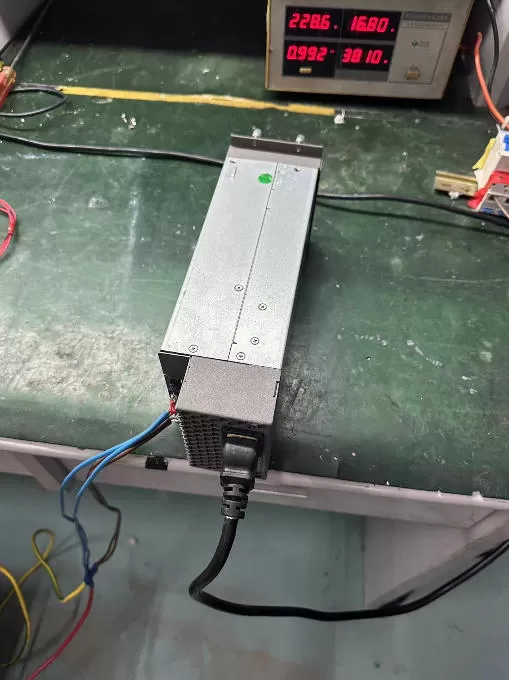
The customer is a manufacturer specializing in power electronics, including inverters, power supply units and transformers. During the product development phase, their testing department needed a more efficient way to evaluate the thermal performance of inverter systems under different load conditions.
Challenges
Before adopting thermal imaging, the customer relied on conventional tools such as thermocouples and contact temperature sensors. These methods presented several limitations:
Limited measurement points: Only specific locations could be monitored
Delayed feedback: No real-time visualization of heat distribution
Time-consuming setup: Sensor placement required manual effort
Hidden risks: Potential hotspots could go undetected
As inverter designs became more compact and power-dense, these limitations increasingly affected testing efficiency and product validation accuracy.
Solution
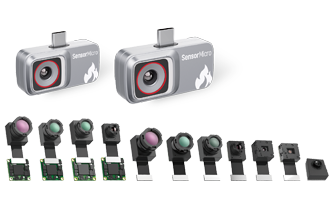
To address these challenges, the customer introduced infrared thermal imaging into their R&D testing workflow. By using a thermal imaging device, the testing team was able to:
Capture real-time temperature distribution across the entire inverter system
Identify hotspots and thermal anomalies instantly
Evaluate heat dissipation performance under dynamic conditions
Reduce reliance on multiple contact sensors
This non-contact, full-field measurement approach significantly improved both testing efficiency and accuracy.
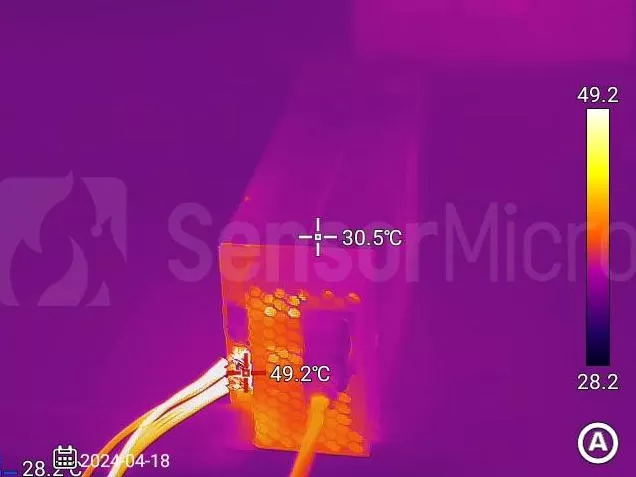
After integrating infrared thermal imaging into their testing process, the customer achieved faster testing cycles with reduced setup time and early detection of design flaws, which further improves product reliability and safety.
The ability to visualize heat distribution in real time allowed the R&D team to make faster, data-driven decisions during product development.
For manufacturers of inverters, power supplies, and transformers, ensuring optimal thermal performance is critical. Infrared thermal imaging not only enhances testing efficiency but also provides deeper insights into product behavior under real-world conditions.


 CN
CN
 EN
EN