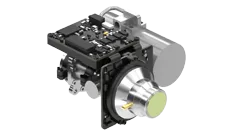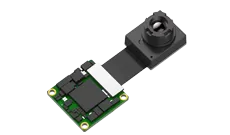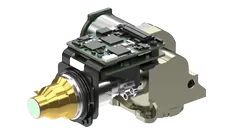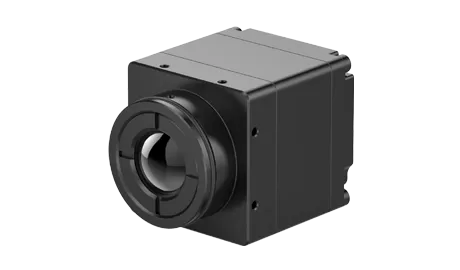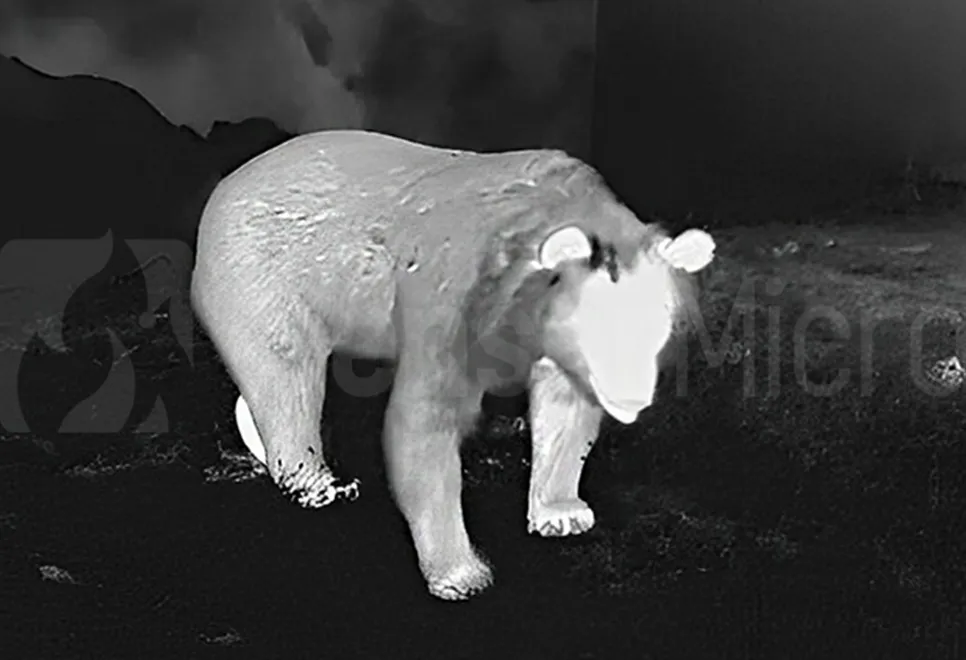
Smart manufacturing and industrial digitalization require reliable sensing technologies to break through the limitations of manual and traditional visual inspection. Driven by Industry intelligent transformation, modern factories prioritize accurate perception, automated inspection, and full-scenario operational safety. Unlike visible-light cameras that only capture surface visual information, modern infrared technology detects thermal energy radiated by all objects, enabling invisible state monitoring for industrial equipment and production processes. Traditional visible-light inspection systems rely on ambient lighting and surface texture recognition, making them ineffective in dark, dusty, high-temperature, and enclosed industrial scenarios. As a robust non-contact sensing method, infrared technology captures inherent thermal radiation from all objects to deliver stable, high-precision detection regardless of external light conditions. Integrated with sensitive infrared detector, professional industrial infrared camera systems have become foundational equipment for intelligent maintenance, precision quality control, safety monitoring, and energy conservation across global manufacturing industries.
One of the core industrial values of infrared technology is real-time process thermal monitoring for continuous production lines. In automated industrial production, subtle thermal inconsistencies often lead to batch product defects, which are difficult to capture with naked eyes and visible devices. High-sensitivity infrared camera core systems can perform full-frame thermal tracking of continuous production processes. In automotive manufacturing, infrared imaging monitors the temperature uniformity of vehicle body welding and paint curing processes, avoiding quality problems such as uneven paint adhesion and virtual welding caused by local temperature anomalies. This real-time thermal supervision effectively stabilizes production consistency and reduces batch defective rates for automated production lines.
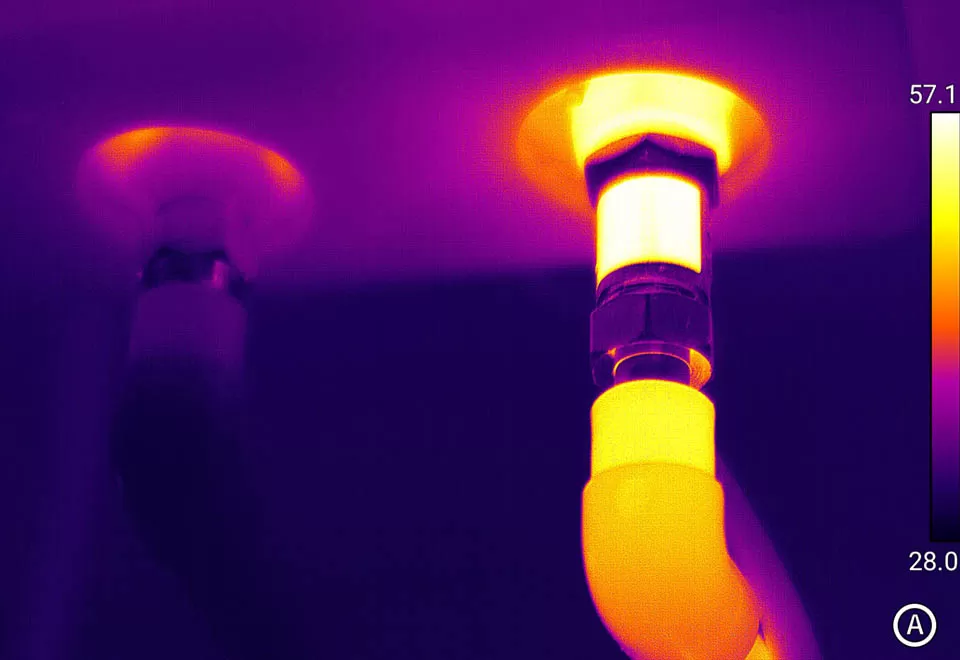
Equipment predictive maintenance and fault diagnosis are the most widely adopted applications of infrared technology in heavy industry. Most mechanical and electrical failures are preceded by subtle abnormal temperature rises that are invisible to human eyes and visible cameras. Industrial infrared camera devices equipped with high-sensitivity infrared detector units can capture minimal temperature deviations and locate hidden faults in real time. In power industries, these systems inspect transformers, switchgears, and transmission lines to identify loose connections, insulation aging, and overload heating, preventing short-circuit failures and industrial fires. In metallurgy and heavy machinery manufacturing, embedded thermal module solutions continuously monitor high-temperature equipment such as blast furnaces and rolling mills. Verified by real factory data, infrared monitoring raises the early warning accuracy of blast furnace lining damage to 98%, drastically reducing unplanned shutdowns and avoiding tens of millions of economic losses compared with traditional scheduled maintenance.
For industrial safety and environmental governance, infrared camera systems fill the technical gaps of visible-light monitoring in extreme working conditions. In chemical, mining, and oil and gas fields, infrared imaging penetrates dense smoke, dust, and complete darkness to detect concealed overheating hazards, pipeline leakage, and latent fires for 24-hour risk prevention. Cooperated with infrared gas sensors, the system tracks industrial waste gas and toxic pollutant emissions, assisting enterprises in achieving standardized environmental compliance.
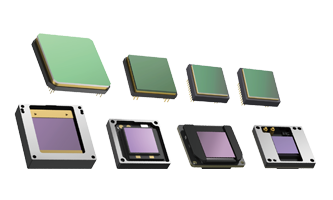
In addition, infrared technology facilitates energy efficiency optimization in the new energy industry. Professional infrared detector and thermal module devices detect hot spots and invisible micro-cracks on photovoltaic panels and identify overheating faults on wind turbine blades and gearboxes. They also accurately locate heat loss points in industrial thermal pipe networks, supporting enterprises in cutting energy consumption and realizing low-carbon, sustainable industrial development.


 CN
CN
 EN
EN