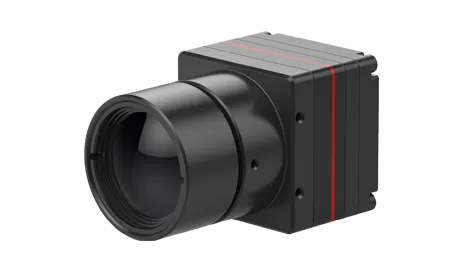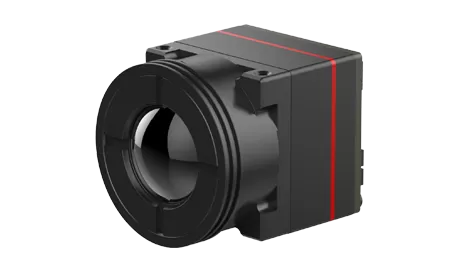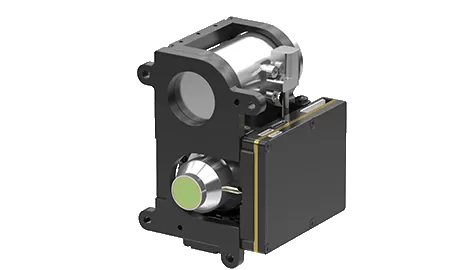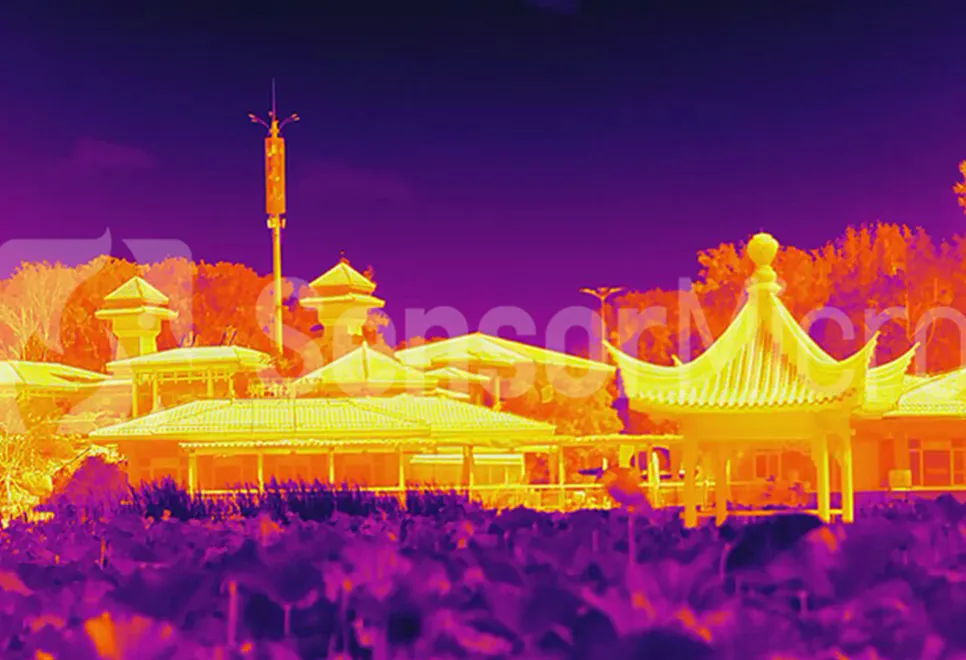
Infrared imaging systems play a critical role in security, industrial inspection, scientific research, and aerospace applications. At the heart of these systems is the infrared detector, which converts infrared radiation into electrical signals for image generation and analysis.
Among high-performance infrared sensing technologies, cooled infrared detectors remain the preferred choice when maximum sensitivity, long-range detection, and superior image quality are required. Depending on the sensor material used, cooled infrared detectors can be classified into several major categories, including Mercury Cadmium Telluride (MCT), Indium Antimonide (InSb), Quantum Well Infrared Photodetectors (QWIP), and Type-II Superlattice (T2SL) detectors. Each technology offers unique advantages and limitations. Understanding their differences is essential when selecting the right detector for a specific application. This article will introduce the more mainstream MCT infrared detectors and T2SL infrared detectors.
What are Cooled Infrared Detectors?
Unlike uncooled detectors, cooled infrared detectors operate at cryogenic temperatures using a built-in cooler. Lower operating temperatures significantly reduce thermal noise, allowing the detector to achieve higher sensitivity and detect extremely small temperature differences. The detector material largely determines the spectral response, sensitivity, operating temperature, and long-term reliability of the system.
MCT Infrared Detectors
Mercury Cadmium Telluride (MCT) is one of the most mature and widely deployed cooled infrared detector technologies. By adjusting the composition of cadmium within the material, MCT detectors can be engineered to cover short-wave infrared (SWIR), mid-wave infrared (MWIR), long-wave infrared (LWIR), and even very-long-wave infrared (VLWIR) bands. This broad spectral flexibility has made MCT the industry standard for many high-performance infrared applications. Another major advantage of MCT is its high absorption coefficient and excellent quantum efficiency. These characteristics enable low noise levels and high detectivity, resulting in outstanding image quality and target detection performance.
T2SL Infrared Detectors
Type-II Superlattice (T2SL) detectors are widely regarded as one of the most promising alternatives to traditional MCT technology. Like MCT, T2SL detectors can be engineered to operate across a wide infrared spectrum, from short-wave infrared to very-long-wave infrared. The key advantage of T2SL lies in its material properties. T2SL materials possess a larger electron effective mass than MCT, especially in long-wave and very-long-wave infrared regions. This significantly reduces interband tunneling current and dark current, improving overall detector performance. Another important benefit is the suppression of Auger recombination through band structure engineering. Reduced Auger recombination extends carrier lifetime and contributes to higher detector efficiency. Material stability is also a major strength. The stronger chemical bonds within T2SL materials improve manufacturing consistency and reduce process complexity. This creates favorable conditions for large-scale production and long-term reliability. T2SL detectors can often operate at higher temperatures than conventional MCT devices while maintaining strong performance. This characteristic supports the development of High Operating Temperature (HOT) infrared detectors, which reduce cooling requirements and system size.
Which Cooled Infrared Detector is Best?
There is no single detector technology that is ideal for every application. MCT detectors continue to dominate high-end infrared imaging because of their exceptional sensitivity and broad spectral coverage. T2SL technology is emerging as a highly competitive solution with advantages in stability, dark current suppression, and higher operating temperatures. The best choice depends on application requirements, including spectral band, operating environment, system size, power consumption, and budget.
Conclusion
Cooled infrared detectors are essential for applications that demand the highest levels of infrared imaging performance. Among the leading technologies, MCT and T2SL detectors each offer unique strengths.
As infrared technology continues to advance, Type-II Superlattice detectors and HOT infrared detector solutions are attracting increasing attention. Their ability to combine high performance with higher operating temperatures may play a significant role in the future evolution of cooled infrared imaging systems.


 CN
CN
 EN
EN