Customer Industry: Industrial Manufacturing
Application Scenario: Wind Turbine Blade Mold Heating Monitoring
Background
The customer is an energy company specializing in the manufacturing of large-scale wind turbine blades. In the production process, blade shells are formed through mold heating, resin infusion, and double-sided compression molding. Each blade measures approximately 90 meters in length with a mold diameter of around 3 meters.
During the heating and curing stage, maintaining stable and uniform mold temperature is essential to ensuring blade structural integrity and product consistency. Even small temperature deviations may lead to uneven curing, internal defects, or reduced bonding strength, which can directly affect production quality and yield. As wind turbine blades continue to become larger and more complex, the customer needed a more efficient way to monitor the heating condition of the molds in real time.
Challenges
Before adopting infrared thermal imaging technology, the customer mainly relied on manual inspection and conventional temperature measurement tools to monitor the mold heating process. However, because of the extremely large size of the molds, it was difficult for operators to obtain comprehensive and real-time temperature data across the entire surface.
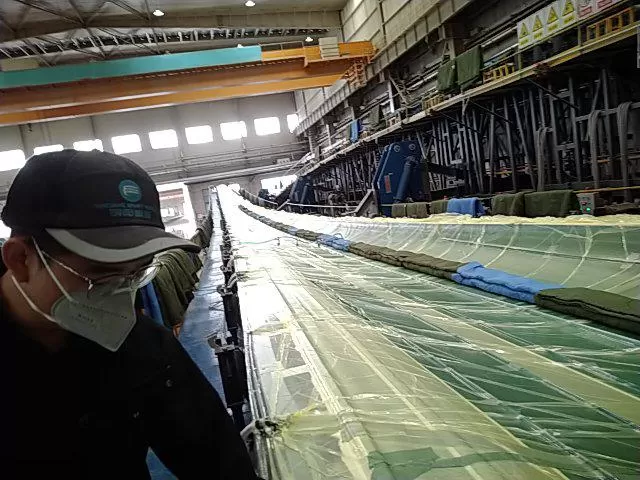
Traditional measurement methods could only capture temperatures at limited points, making it challenging to identify localized overheating or insufficient heating during the resin infusion and curing process. In addition, manual inspection required considerable time and labor, while delayed detection of temperature abnormalities could increase the risk of product defects and material waste. These limitations gradually affected both production efficiency and process consistency.
Solution
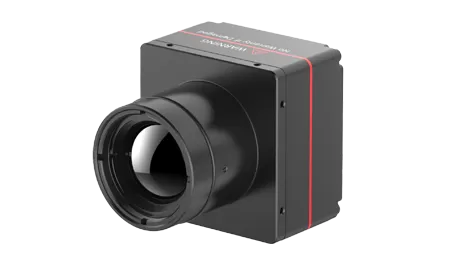
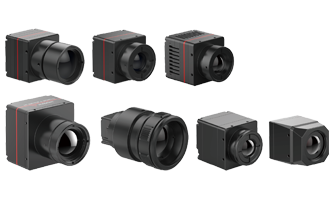
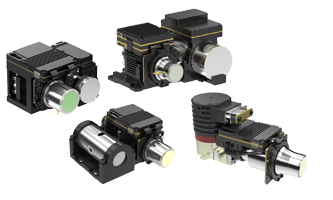
To improve thermal monitoring efficiency, the customer integrated the SensorMicro COIN417RG3 thermal imaging core into the mold heating workflow. The infrared thermal imaging solution enabled the production team to continuously observe the temperature distribution across the entire mold surface throughout the heating and curing process.
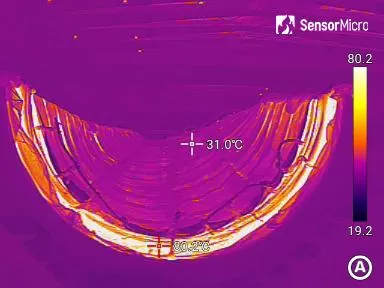
With real-time thermal visualization, operators were able to quickly identify uneven heating areas and abnormal temperature fluctuations during resin infusion and temperature ramp-up stages. This allowed the team to adjust heating parameters and optimize the production process before defects occurred. Compared with conventional contact-based measurement methods, the non-contact thermal imaging solution provided faster response speed, broader monitoring coverage, and more intuitive thermal analysis.
Results
After integrating the COIN417RG3 thermal imaging core into the production line, the customer significantly improved the stability and consistency of the mold heating process. Real-time monitoring helped reduce the occurrence of uneven curing and temperature-related defects, effectively lowering the defective product rate and minimizing production losses.
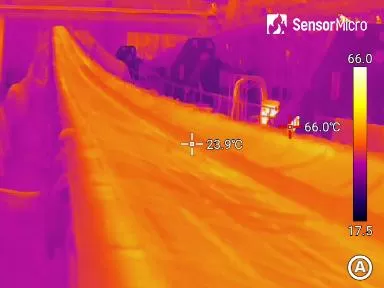
At the same time, the ability to visualize temperature distribution in real time reduced manual inspection workload and improved overall production efficiency. For manufacturers of large-scale wind turbine blades, precise thermal control during the molding and curing process is critical to ensuring product quality and long-term structural reliability. Infrared thermal imaging technology provides a more efficient and intelligent approach to thermal process monitoring in modern industrial manufacturing environments.


 CN
CN
 EN
EN