Thermal imaging has become an essential tool across a wide range of industries, from building diagnostics and electrical inspection to security and outdoor observation. As the technology becomes more widely adopted, one question continues to arise: can thermal cameras actually see through walls?
The short answer is no. However, understanding why requires a closer look at how thermal imaging works and what it is truly designed to detect.
What Thermal Imaging Really Detects
Thermal imaging works by capturing infrared radiation, which is a form of energy emitted by all objects with a temperature above absolute zero. Instead of forming images based on reflected visible light, as conventional cameras do, thermal cameras translate heat differences into visual representations.
This means a thermal image does not show the physical structure, color, or texture of an object. What it reveals is the distribution of temperature across a scene. Warmer areas appear brighter or in warmer colors, while cooler regions appear darker, depending on the palette used.
Because of this fundamental principle, thermal imaging is best understood not as a way of “seeing objects,” but as a method of visualizing heat patterns.
How a Thermal Camera Works
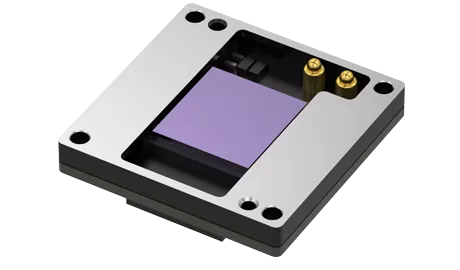
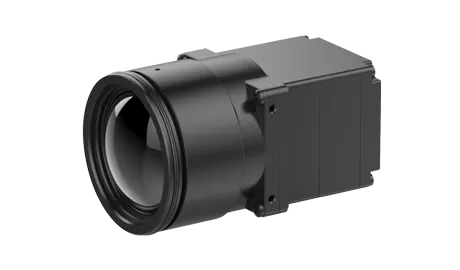
At the core of every thermal imaging system is an infrared detector that senses incoming radiation and converts it into electrical signals. These signals are then processed by onboard algorithms to generate a thermal image that can be interpreted by the user.
The process begins when infrared radiation passes through a specialized lens and is focused onto the detector. The detector responds to differences in energy levels across its surface, effectively mapping temperature variations pixel by pixel. Advanced image processing then enhances contrast, reduces noise, and assigns color gradients to produce a clear image.
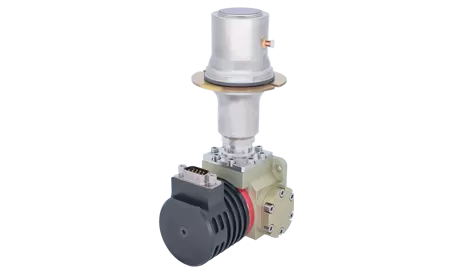
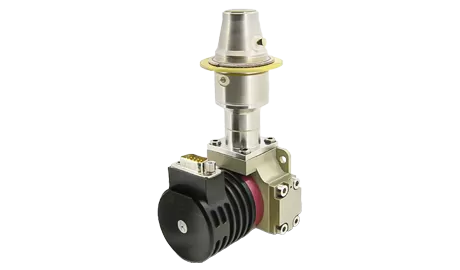
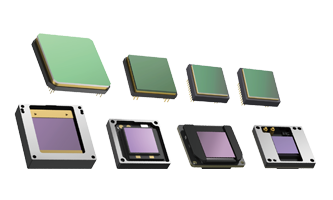
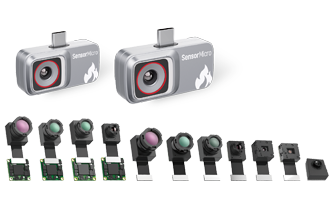
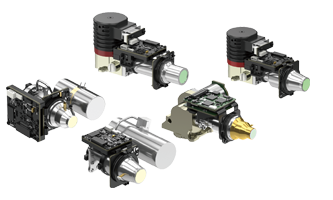
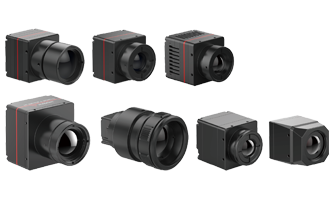
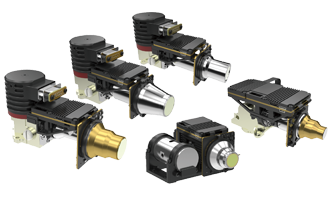
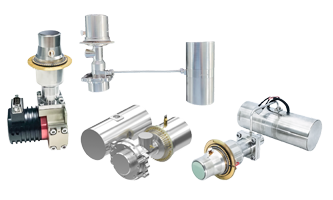
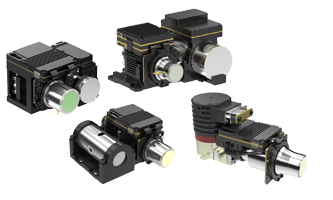
Modern thermal imaging cameras have significantly improved in sensitivity and resolution, enabling them to detect extremely small temperature differences and deliver detailed thermal insights even in challenging environments. SensorMicro’s ApexCore series infrared detector further pushes the limits of thermal detection performance. Designed with high-sensitivity infrared detectors and advanced image processing algorithms, ApexCore delivers exceptional thermal clarity and stability, with sNETD reaching as low as 15mK. This level of sensitivity allows users to capture finer temperature variations, making it particularly well-suited for demanding applications such as precision inspection, condition monitoring, and long-range observation.
Why Thermal Cameras Cannot See Through Walls
Despite common misconceptions, thermal cameras cannot see through walls. This limitation is not due to a lack of technological advancement, but rather the fundamental physics of infrared radiation.
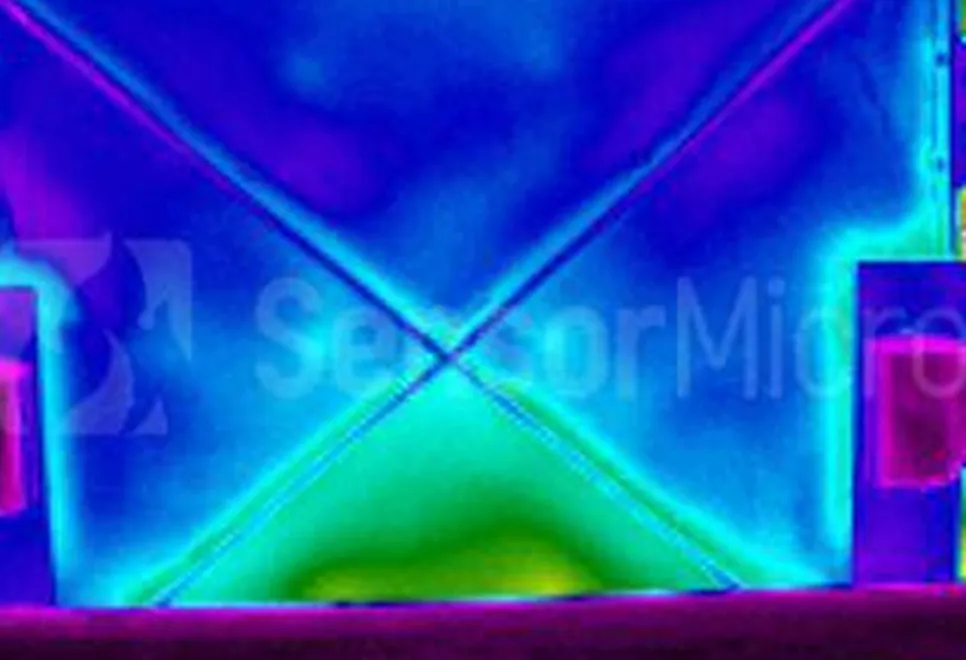
Most common building materials, such as concrete, brick, wood, and drywall, are opaque to infrared radiation. Instead of allowing heat signatures to pass through, these materials absorb and re-emit energy at their surface. As a result, a thermal camera pointed at a wall only detects the temperature of the wall itself, not what lies behind it.
In addition, thermal cameras are passive devices. They do not emit energy that could penetrate materials, unlike technologies such as X-rays or radar. Their function is limited to detecting naturally emitted infrared radiation, which further explains why they cannot reveal hidden objects directly through solid barriers.
Why Thermal Imaging Is Still Useful for “Hidden” Detection
Although thermal cameras cannot see through walls, they are still highly effective at identifying issues that originate behind surfaces. This is because temperature differences caused by internal structures or defects often propagate to the outer surface.
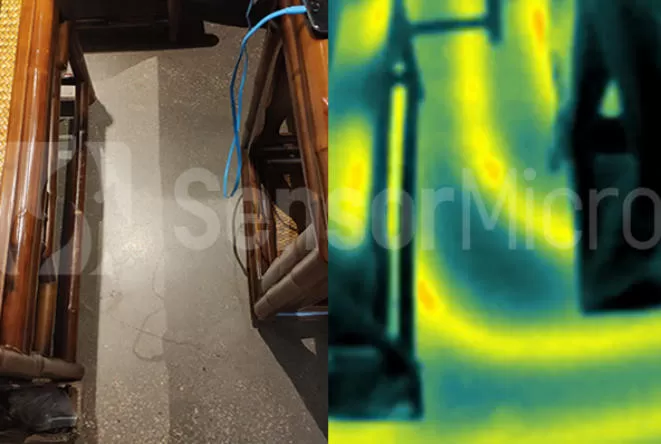
For example, a hot water pipe running inside a wall may create a warmer line that becomes visible on the surface. Similarly, electrical faults can produce localized heat buildup, while moisture intrusion often leads to cooler areas due to evaporation effects. Poor insulation can also result in uneven temperature distribution, making energy loss clearly visible in a thermal image.
In these cases, the camera is not seeing through the wall, but rather detecting indirect thermal evidence of what is happening behind it. This capability is what makes thermal imaging so valuable in diagnostics and maintenance applications.
Common Misunderstandings About Thermal Imaging
The idea that thermal cameras can see through walls is often reinforced by movies and popular media, where the technology is portrayed as a form of X-ray vision. In reality, thermal imaging operates on entirely different principles and does not provide structural visibility.
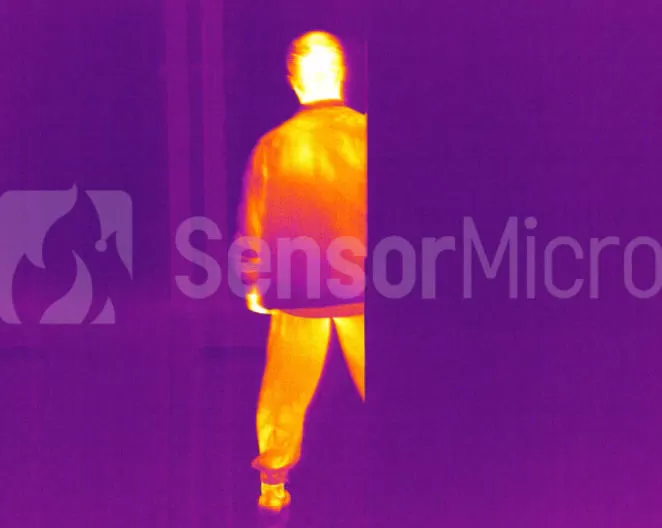
Another common misunderstanding is that thermal cameras can identify people or objects hidden behind obstacles. In practice, only the surface temperature of the obstacle is visible, unless there is a measurable heat transfer effect that alters that surface.
Clarifying these misconceptions is important, especially for first-time users, as it ensures the technology is applied correctly and expectations remain aligned with real-world performance.
Where Thermal Imaging Excels
While it has its limitations, thermal imaging excels in scenarios where temperature differences provide critical insight. It performs reliably in complete darkness and can penetrate environmental obscurants such as smoke or light fog better than visible light systems.
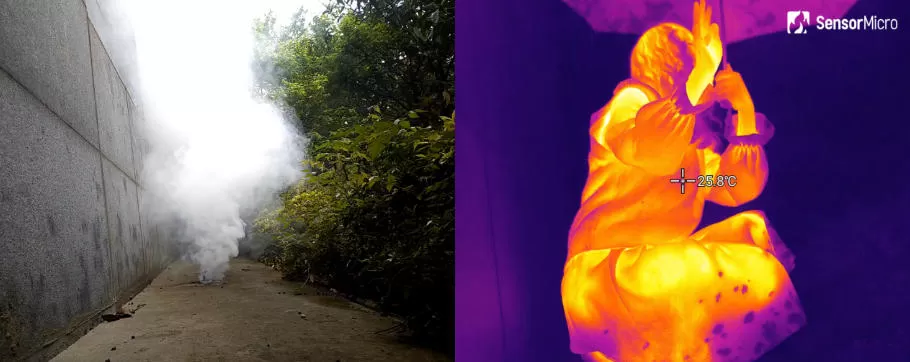
This makes it particularly effective in applications such as building inspection, where it helps identify insulation defects and air leakage, as well as in electrical and mechanical maintenance, where it detects overheating components before failure occurs. It is also widely used in security and outdoor environments to identify heat signatures when visibility is limited.
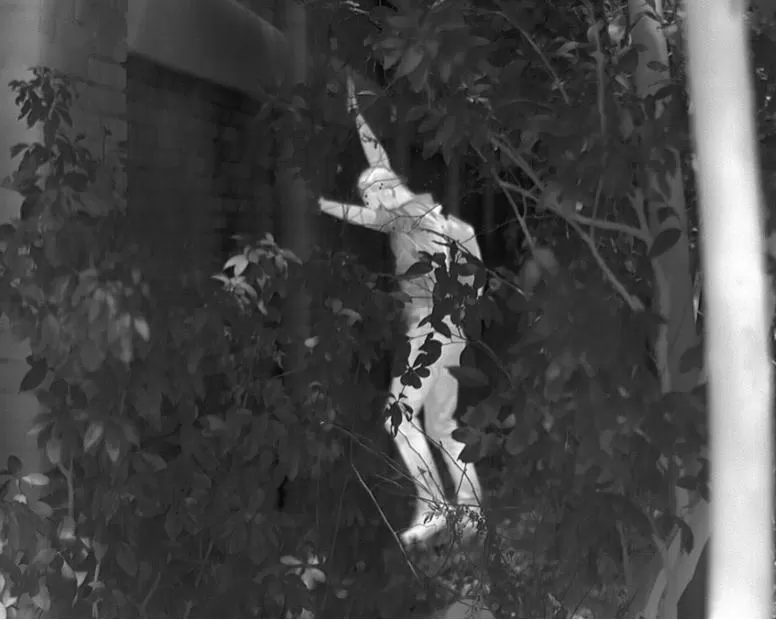
By focusing on heat rather than visual appearance, thermal imaging provides a unique layer of information that cannot be obtained through conventional imaging technologies.


 CN
CN
 EN
EN