Infrared thermal imaging technology has become an indispensable tool for temperature measurement in various fields, from industrial quality control and medical diagnosis to public health monitoring. The accuracy of temperature measurement using thermal cameras and infrared cameras directly depends on the performance of their core components—infrared detectors and thermal modules—and is also affected by a series of external and internal factors. This article explores the main error sources of infrared thermal imaging temperature measurement, spanning environmental interference, equipment performance, and algorithm defects, and proposes corresponding calibration methods to ensure the reliability and accuracy of temperature measurement results.
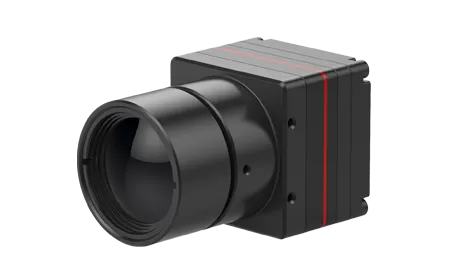
At the heart of infrared temperature measurement lies the infrared detector, which captures infrared radiation emitted by the target and converts it into electrical signals, and the thermal module, which processes these signals to calculate the target’s temperature. Any deviation in the performance of these two components will directly lead to temperature measurement errors. Meanwhile, thermal cameras and infrared cameras, as the carrier of the entire measurement system, integrate the infrared detector and thermal module, and their structural design and operational state also play a key role in the accuracy of temperature measurement. Understanding the error sources and mastering scientific calibration methods are crucial to maximizing the value of infrared temperature measurement technology.
Environmental factors are one of the most common and significant sources of error in infrared thermal imaging temperature measurement. First, ambient temperature fluctuations will affect the performance of the infrared detector and thermal module. When the ambient temperature is too high or too low, the thermal noise of the infrared detector will increase, and the signal processing accuracy of the thermal module will decrease, resulting in deviations in the measured temperature. Second, atmospheric attenuation—caused by water vapor, dust, smoke, and other particles in the air—will weaken the infrared radiation emitted by the target during transmission, making the infrared detector receive weaker signals and leading to low measured temperature values. In addition, solar radiation and reflective surfaces in the environment can cause the target’s surface temperature to rise abnormally, resulting in false high temperature readings, especially when measuring outdoor targets.
Equipment-related factors are another core source of temperature measurement errors, mainly involving the performance of the infrared detector and thermal module, as well as the configuration of thermal cameras and infrared cameras. The infrared detector’s sensitivity, resolution, and response speed directly affect the accuracy of radiation capture: a detector with low sensitivity cannot distinguish small temperature differences, while a detector with slow response speed will lag behind real-time temperature changes. The thermal module, which is responsible for signal amplification, filtering, and temperature calculation, may introduce errors due to component aging, circuit interference, or incorrect parameter settings. Moreover, the lens of thermal cameras and infrared cameras, if contaminated or scratched, will reduce the transmittance of infrared radiation, affecting the signal received by the infrared detector and further leading to measurement errors. The distance between the camera and the target, as well as the field of view setting, can also cause errors—if the target is too small relative to the field of view, the measured temperature may be affected by the surrounding background.
Algorithm defects are often overlooked but critical sources of error in infrared temperature measurement. The temperature calculation of thermal cameras and infrared cameras relies on algorithms that convert the infrared radiation signals captured by the infrared detector into temperature values, based on the Stefan-Boltzmann law and the target’s emissivity. Emissivity, the ratio of the infrared radiation emitted by a target to that emitted by a blackbody at the same temperature, is a key parameter in the algorithm. If the algorithm uses an incorrect emissivity value (e.g., using the emissivity of a blackbody for a non-blackbody target), significant measurement errors will occur. In addition, algorithms that lack effective noise reduction and background correction functions cannot filter out interference signals, leading to unstable and inaccurate temperature measurement results. Some low-quality thermal modules use simplified algorithms to reduce costs, which further exacerbates measurement errors.
To address the above error sources, scientific and targeted calibration methods are essential to ensure the accuracy of infrared thermal imaging temperature measurement. Calibration should cover the entire system, including the infrared detector, thermal module, thermal camera, and infrared camera, and be carried out regularly according to actual usage scenarios.
Environmental adaptation and correction are the first steps in calibration. Before temperature measurement, the thermal camera or infrared camera should be placed in the measurement environment for a certain period of time to allow the infrared detector and thermal module to adapt to the ambient temperature, reducing errors caused by temperature differences. For atmospheric attenuation, corresponding correction coefficients can be set in the thermal module according to the ambient humidity, dust concentration, and measurement distance, to compensate for the weakened infrared radiation. When measuring outdoor targets, shading devices can be used to avoid direct solar radiation, and the influence of reflective surfaces can be reduced by adjusting the measurement angle.
Equipment calibration focuses on the performance of the infrared detector and thermal module, as well as the overall performance of the camera. The infrared detector can be calibrated using a blackbody radiation source with a known temperature: the detector captures the infrared radiation of the blackbody at different temperatures, and the thermal module adjusts the signal processing parameters to ensure that the measured temperature matches the blackbody’s actual temperature. This process can correct the sensitivity and linearity of the detector, reducing errors caused by component drift. For the thermal module, regular inspection and maintenance of its internal circuits and signal processing units are required to avoid errors caused by component aging or interference. The lens of the thermal camera or infrared camera should be cleaned regularly to ensure high transmittance, and the camera’s distance and field of view parameters should be calibrated according to standard targets to ensure that the target is accurately within the measurement range.
Algorithm optimization and calibration are crucial to improving measurement accuracy. First, the emissivity parameter in the algorithm should be calibrated according to the actual target material—different materials (such as metal, plastic, and fabric) have different emissivity values, and accurate setting of emissivity can significantly reduce measurement errors. Second, the thermal module’s algorithm should be updated or adjusted to enhance noise reduction and background correction capabilities, filtering out interference signals and improving the stability of temperature measurement. For high-precision measurement scenarios, advanced algorithms such as adaptive emissivity correction and multi-point temperature calibration can be adopted to further improve the accuracy of the infrared temperature measurement system.
In conclusion, the accuracy of infrared thermal imaging temperature measurement is affected by multiple factors, including environmental interference, equipment performance (infrared detector, thermal module, thermal camera, infrared camera), and algorithm defects. To ensure reliable temperature measurement results, it is necessary to fully understand these error sources and adopt targeted calibration methods, including environmental adaptation, equipment calibration, and algorithm optimization. By regularly calibrating the entire infrared temperature measurement system, we can minimize measurement errors, make full use of the advantages of thermal cameras and infrared cameras, and expand the application scope of infrared temperature measurement technology in various fields, providing accurate and reliable temperature data support for production, life, and scientific research.


 CN
CN
 EN
EN