When selecting a thermal imaging camera, many buyers focus on resolution and sensor performance. However, one of the most decisive factors in long-distance detection is often overlooked: focal length.
The relationship between focal length and detection range directly determines how far a target can be detected, recognized, or identified. Whether you’re designing a long-range monitoring system, industrial monitoring solution, or perimeter security platform, understanding this relationship is essential for achieving reliable thermal performance.
This guide explains how focal length works in infrared lenses and how it influences real-world detection capability.
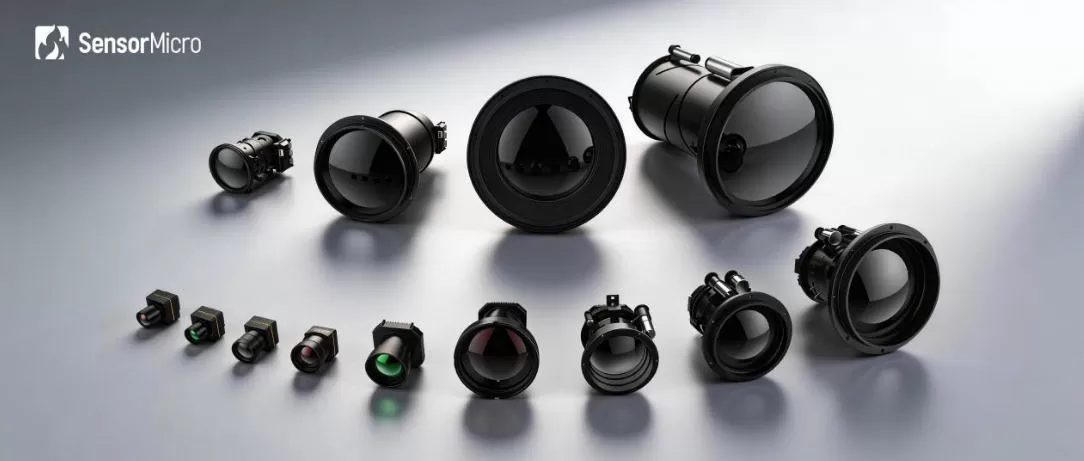
What is Focal Length in Thermal Imaging?
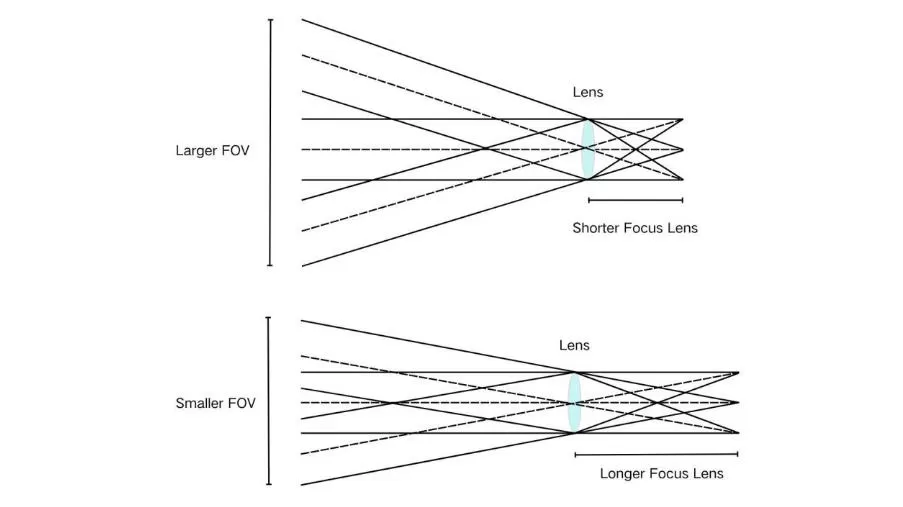
In simple terms, focal length (measured in millimeters) determines how “zoomed in” a thermal lens is.
Short focal length → Wider field of view (FOV), lower magnification
Long focal length → Narrower FOV, higher magnification
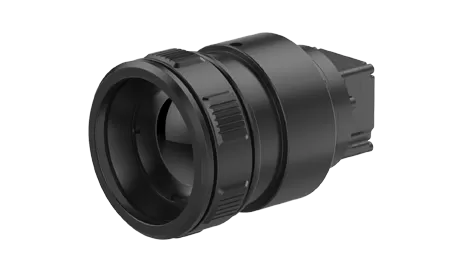
Unlike visible-light optics, thermal imaging lenses operate in infrared wavelengths (typically LWIR 8–14μm), requiring specialized materials such as germanium. But the optical principle remains the same: longer focal lengths enlarge distant objects within the sensor’s pixel array.
How Focal Length Impacts Detection Range
Detection performance is commonly described using three levels:
Detection – The ability to perceive the presence of an object
Recognition – The ability to classify the object type
Identification – The ability to determine detailed characteristics
Longer focal length lenses project a smaller area of the scene onto the sensor, meaning:
For example:
A 13mm lens may be ideal for short-range inspection or building diagnostics.
A 50mm–100mm lens can support medium-distance monitoring.
A 100mm+ telephoto thermal lens enables kilometer-level detection in long-distance applications.
The Trade-Off: Focal Length vs Field of View
Increasing focal length narrows the field of view. This means you gain distance performance, but you lose wide-area coverage.
For perimeter surveillance, a narrow FOV telephoto lens allows long-range detection but may require pan-tilt systems to maintain full coverage. For industrial inspection, a wider FOV may be preferable to capture larger equipment areas.
Selecting focal length is therefore not about “longer is better” — it’s about matching lens geometry to operational requirements.

750mm lens, 1280×1024/F4
Sensor Resolution Also Matters
Focal length alone does not determine detection distance. It works together with:
Higher resolution sensors allow longer effective recognition distances because more pixels are available to resolve distant objects.
A long focal length lens paired with insufficient resolution may not deliver the expected performance.
How to Select the Right Focal Length
When choosing a thermal lens, ask:
What is the required detection distance?
What target size must be detected?
How much coverage area is needed?
What sensor resolution is being used?
Professional system designers often calculate Instantaneous Field of View (IFOV) to determine how many pixels will cover a target at a specific distance — a critical metric for ensuring reliable detection.
Focal length directly influences detection range by controlling magnification and pixel coverage of distant objects. However, it must be evaluated alongside field of view, sensor resolution, and application goals.
In thermal imaging system design, the right focal length is not simply the longest lens available — it is the one that aligns optical geometry with real-world detection requirements.


 CN
CN
 EN
EN