In the field of infrared thermography, the ability to capture and interpret heat signatures has become a cornerstone of modern security, industrial inspection, and scientific research. However, not all thermal imaging systems are created equal. The most fundamental decision engineers and procurement specialists face is choosing between two distinct technological architectures: cooled and uncooled Infrared detectors.
Understanding the nuances of these technologies is essential for selecting the right tool for a specific mission. While both types of sensors detect infrared radiation, their operational physics, performance metrics, and cost structures differ significantly.
Uncooled Infrared Detectors
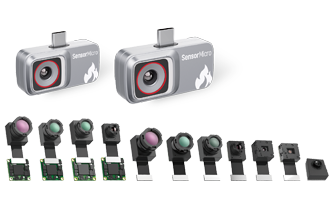
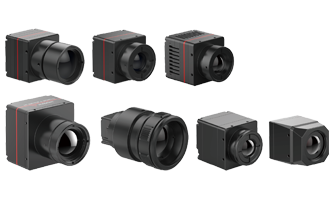
Uncooled infrared detectors are the most common thermal imaging technology found in commercial markets today. These sensors, typically based on microbolometer technology, operate at ambient temperatures. They work by measuring the change in resistance of a sensing material as it is heated by incoming infrared radiation.
The primary advantage of uncooled systems is their simplicity. Because they do not require a cryogenic cooling mechanism, they are smaller, lighter, and more cost-effective. Uncooled detectors are ideal for applications where portability and low maintenance are prioritized over extreme sensitivity. Common uses include building inspections, firefighting, and automotive night vision.
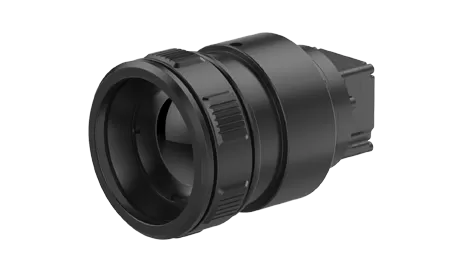
For those seeking high-reliability components for these versatile applications, the SensorMicro uncooled infrared detector provides an excellent balance of resolution and durability. These detectors are designed to integrate seamlessly into handheld devices and security systems, offering stable performance without the need for complex cooling hardware.
Cooled Infrared Detectors
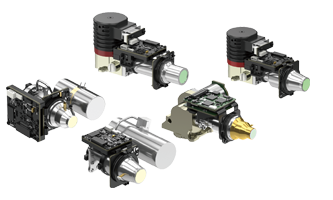
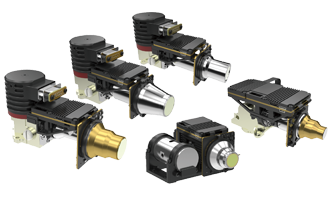
On the other end of the spectrum are cooled infrared detectors. These sensors are photon-counting devices, usually made from materials like Indium Antimonide (InSb), Quantum Well Infrared Photodetector (QWIP), Mercury Cadmium Telluride (MCT), and Tpye-II Superlattice (T2SL). To function, they must be cooled to cryogenic temperatures using an integrated cryocooler.
Why go to such lengths to cool a sensor? The answer lies in sensitivity and speed. Cooling the detector drastically reduces thermal noise (dark current), allowing the sensor to detect even the most minute temperature differences. This results in a significantly lower Noise Equivalent Temperature Difference (NETD) compared to this of uncooled sensors.
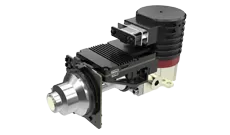
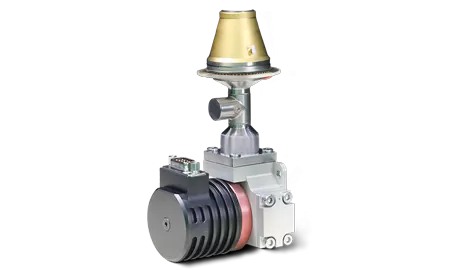
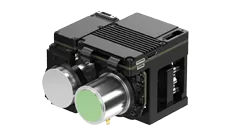
The SensorMicro cooled infrared detector is engineered for these high-stakes environments. These modules are indispensable for long-range surveillance, high-speed scientific analysis, and Optical Gas Imaging (OGI). In OGI applications, the superior sensitivity of a cooled detector is required to visualize the subtle absorption signatures of fugitive gas leaks that uncooled sensors would simply miss.
Key Technical Differences
1. Spectral Range and Sensitivity
Uncooled detectors primarily operate in the Long-Wave Infrared (LWIR) band (8–14 μm). This band is ideal for viewing objects at room temperature.Cooled detectors, however, are often tuned to both Mid-Wave Infrared (MWIR) band (3–5 μm) and LWIR. Selecting between MWIR and LWIR technologies ultimately depends on the environmental conditions and mission requirements. MWIR excels in humid and thermally complex scenarios, while LWIR offers greater resilience in dry, dusty, and long-distance surveillance applications.
2. Speed and Integration Time
One of the most critical differences is the integration time. Cooled detectors have very fast response times, measured in microseconds. This allows them to capture snapshots of high-speed moving objects without motion blur. Uncooled detectors have much slower integration times, which can result in blurring when imaging fast-moving targets like turbine blades or projectiles.
3. Lifespan and Maintenance
Because uncooled detectors have no moving parts, they have an incredibly long operational life. Cooled detectors rely on a cryocooler, which has a finite lifespan, often rated between 10,000 to 30,000 hours of operation. After this period, the cooler requires servicing or replacement.
How to Choose?
The choice often boils down to the distance and the nature of the target.
Choose Uncooled if: You need a portable, instant-on camera for short-to-medium range detection (under 1km). If your budget is a constraint and the target isn't moving at high velocity, an uncooled detector is the logical choice.
Choose Cooled if: You are performing long-range surveillance (over 5km), need to see through smoke/haze over long distances, or are conducting specialized gas detection. If you need to measure a tiny temperature change on a very small or very fast-moving object, the cooled detector is the only viable option.
The SensorMicro Advantages
SensorMicro leverages its expertise from advanced microbolometers to SWaP-optimized cooled ir solutions. ApexCore series next-gen infrared detectors is a disruptive product that redefines the standard of uncooled thermal imaging technology. It innovatively rebuilts thermsensitive material system, redesigns readout integrated circuit (ROIC) structure, reconstructs Micro-Electro-Mechanical System (MEMS) architecture, and iterates the packaging method into highly-integrated Gen-4 technology, contributing to industrial-leading image clarity and sensitivity. Moreover, SensorMicro is one of the few manufacturers that masters High-Operating-Temperature (HOT) cooled infrared technology and offers a complete portfolio of HOT products covers a wide range of resolutions and form factors. It is widely agreed in the industry that HOT cooled infrared components have lower SWaP. Infrared HOT solutions can dramatically reduced the need of demanding cooling conditions, with the highest operating temperature up to 160K.
Whether a project requires the rugged, low-maintenance nature of an uncooled system or the extreme precision of a cooled module, SensorMicro provides the foundational technology to make it possible. By offering both uncooled and cooled detector modules, SensorMicro empowers integrators to tailor their thermal imaging solutions to specific environmental and regulatory requirements.
The debate between cooled and uncooled infrared detectors is not about which technology is better, but rather which is fitter for the purpose. As thermal imaging continues to expand into new sectors like autonomous driving and smart city monitoring, the demand for both types of sensors will only grow. By understanding the underlying science, from the cryogenic cooling of photon detectors to the resistive changes in microbolometers, industry professionals can ensure they are seeing the world in the most effective light possible.


 CN
CN
 EN
EN