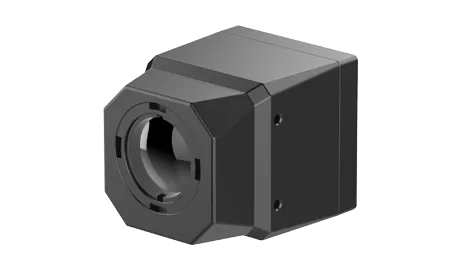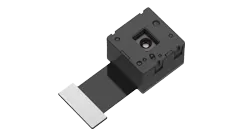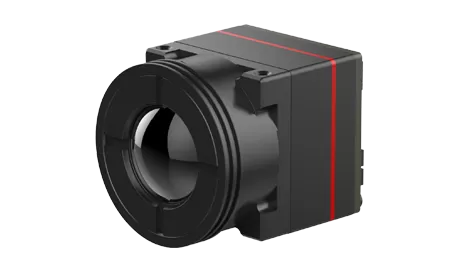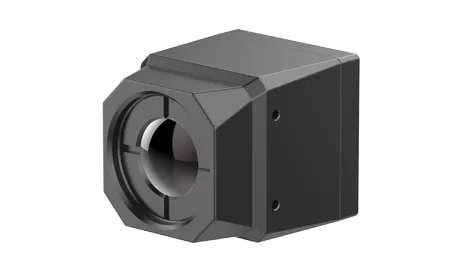
In petrochemical, power energy, oil and gas storage, and advanced manufacturing industries, leaks of flammable, explosive, and toxic industrial gases pose critical risks of safety accidents, environmental pollution, and energy waste. Traditional inspection methods, including soap bubble testing, portable sensor single-point sampling, and manual patrol checks, feature low efficiency, widespread detection blind spots, and invisible leakage identification. These conventional solutions fail to detect minor and long-distance gas leaks effectively. As an advanced non-contact sensing method, optical gas imaging based on core infrared technology delivers all-weather, visualized, and large-area scanning capabilities, making it a reliable and standard solution for precise gas leak detection, industrial safety management, and environmental compliance supervision.
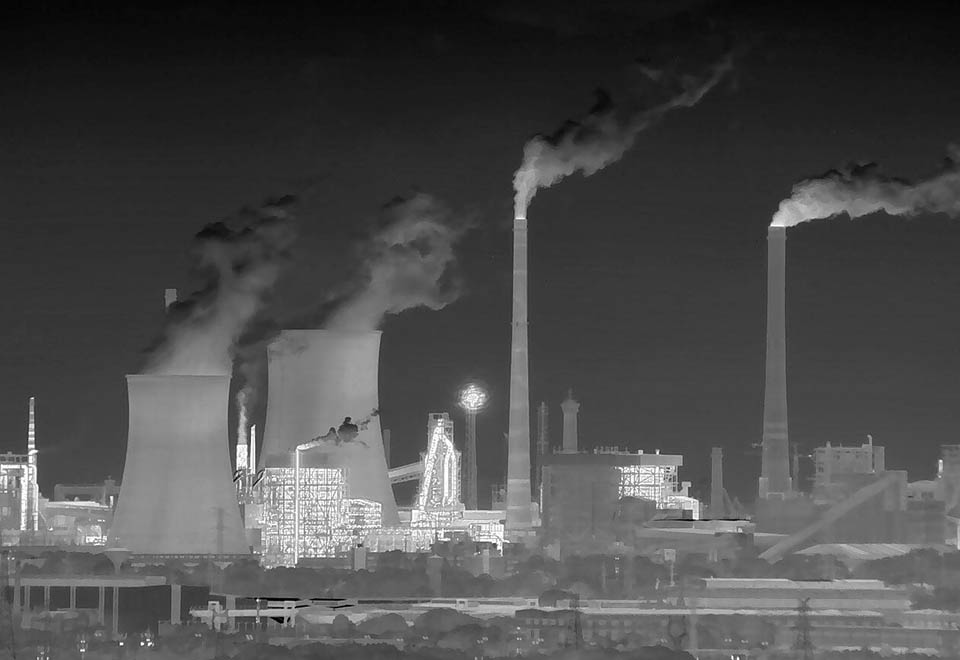
During actual industrial detection, infrared equipment receives infrared radiation from the environmental background. When gas leakage occurs from pipelines, storage tanks, or industrial equipment, the overflowing gas plume absorbs specific-band infrared energy, forming an obvious grayscale and temperature difference between the leakage area and the surrounding environment. The system’s infrared detector captures these subtle changes and converts invisible gas plumes into visible dynamic cloud images through algorithm processing. This technology enables precise leak location and visual judgment of leakage scale. Compared with traditional detection tools, infrared technology-powered gas leak detection supports non-contact, non-stop, long-distance, and full-range scanning, effectively capturing trace-level ppm micro leaks with far higher detection sensitivity and stability.
In the power industry, high-voltage substations, switchgears, and GIS equipment widely adopt sulfur hexafluoride (SF6) as insulating and arc-extinguishing gas. SF6 gas is colorless, odorless, extremely difficult to detect manually, and possesses strong greenhouse effects. Traditional detection tools cannot pinpoint exact leak locations, while professional infrared gas leak detection equipment specially captures SF6 leakage in real time. It realizes daily condition monitoring of electrical insulation systems, avoids insulation failure and short-circuit tripping faults, and supports low-carbon emission management in the power sector.
Furthermore, infrared technology effectively supports industrial environmental supervision and VOCs emission control. Industrial volatile organic compounds (VOCs), alcohols, and aldehydes are key pollutants in industrial exhaust emissions. Traditional monitoring lacks real-time visualization capabilities. Optical gas imaging enables dynamic visual monitoring of organized pipeline emissions and unorganized factory fugitive emissions, rapidly investigating excessive discharge and hidden leakage problems. It helps manufacturing enterprises achieve refined exhaust management and meet standardized environmental compliance requirements.


 CN
CN
 EN
EN