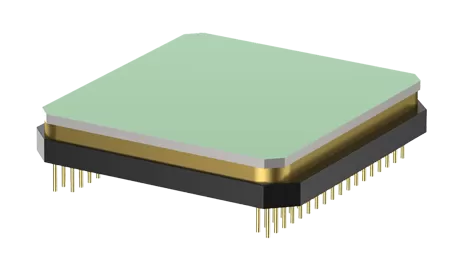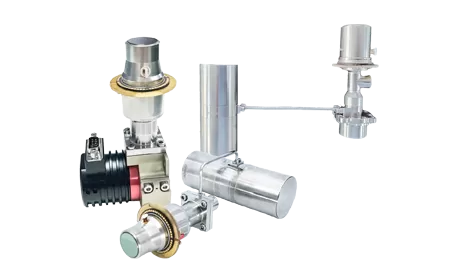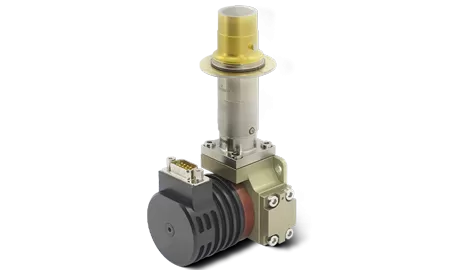
Choosing an infrared thermal detector is not as simple as selecting the highest resolution or the lowest NETD. A good infrared detector should provide the right balance of image quality, sensitivity, reliability, power consumption, and size for the intended application.
For example, a 640 × 512 detector may be a good choice for industrial inspection, while a smaller and lower-power detector may be more suitable for consumer market. For high-performance long-range imaging, a cooled detector may be preferred over an uncooled one.
So, what makes an infrared thermal detector "good"? The answer depends on the application, but several key specifications can help you make a better decision.
Resolution: How Much Detail Can the Detector Capture?
Resolution is one of the first specifications to consider when choosing an infrared detector. It determines the number of pixels used to create a thermal image.
Common resolutions include 256 × 192, 384 × 288, 640 × 512, and 1280 × 1024. A 640 × 512 detector has 327,680 pixels, while a 384 × 288 detector has 110,592 pixels. This means the 640 × 512 detector provides nearly three times as many pixels.
More pixels can provide more image detail and help users identify smaller targets, especially when the target is far away. However, higher resolution does not automatically mean better performance in every situation.
The lens, target distance, field of view, and image processing system all affect the final result. If the lens is not well matched to the detector, the additional pixels may not provide a meaningful improvement.
For this reason, resolution should always be considered together with the optical system and the actual application.
NETD: How Well Can it Detect Small Temperature Differences?
NETD, or Noise Equivalent Temperature Difference, is another important specification for infrared detectors. It is commonly expressed in millikelvin (mK).
In simple terms, a lower NETD means that the detector can distinguish smaller differences in temperature under specified test conditions. For example, a detector with a NETD of 30mK generally has higher thermal sensitivity than one with a NETD of 50mK.
This can be important when observing objects with small temperature differences. In industrial inspection, for example, a more sensitive detector may help reveal subtle thermal changes in electrical equipment or machinery.
However, NETD should not be viewed as the only measure of image quality. The actual performance of a thermal imaging system is also affected by the lens, calibration, image processing, environmental conditions, and measurement distance.
A common selection mistake is to choose a detector based only on the lowest NETD value in a product specification sheet. In real applications, a detector with excellent NETD may not deliver the expected image quality if the optical system or image processing is poorly matched.
Pixel Size: Does Smaller Always Mean Better?
Pixel size refers to the distance between the centers of two adjacent pixels on an infrared detector. Common infrared detector pixel pitches include 8μm, 12μm, and 17μm.
A smaller pixel pitch allows more pixels to be placed in the same physical area. It can also help reduce the size of the detector and, in some system designs, support a more compact optical system.
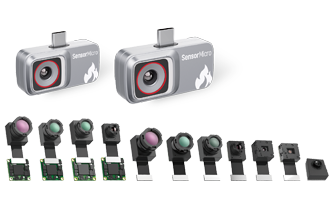
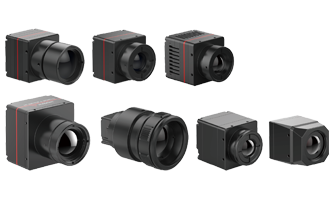
For example, an 8μm detector can offer a smaller form factor than a detector with a larger pixel pitch at the same resolution. This can be valuable for handheld thermal cameras, compact camera cores, and other space-constrained devices. SensorMicro’s iTL608 uncooled infrared camera core features an industry-leading 13 × 13mm ultra-miniature footprint, and iTL1208 provides excellent image quality and small size at the same time.
Spectral Range: Can the Detector See the Right Infrared Wavelengths?
Infrared detectors operate within specific wavelength ranges. For thermal imaging, the most common bands include Long-Wave Infrared (LWIR), typically around 8–14μm, and Mid-Wave Infrared (MWIR), typically around 3–5μm.
LWIR detectors are widely used for general thermal imaging because objects at normal temperatures emit significant infrared radiation in this range. They are commonly used in industrial inspection, building diagnostics, security monitoring, and many other applications.
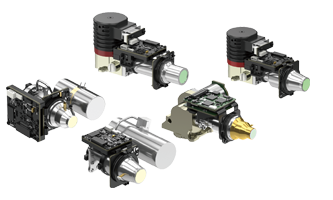
MWIR detectors can offer advantages in certain high-temperature and long-range imaging applications. Cooled MWIR detectors are often used when high sensitivity and high-performance imaging are required.
Therefore, a good infrared detector is not simply one with the widest spectral range. It should operate in the wavelength band that matches the target and application.
Cooled Detector or Uncooled Detector: Which Type is Better?
There is no universal answer to whether a cooled or uncooled infrared detector is better.
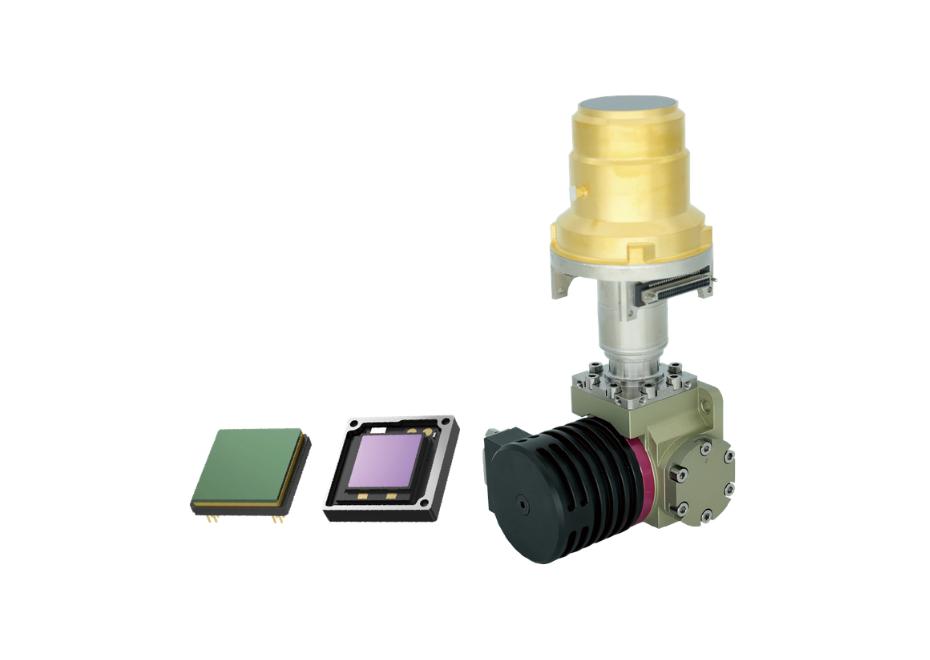
Uncooled detectors operate without a cryogenic cooling system. They are usually smaller, lighter, and more power-efficient, making them suitable for compact thermal cameras and many commercial applications.
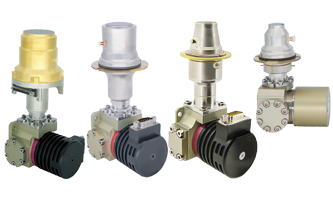
Cooled detectors use a cooling system to reduce the detector's operating temperature. This can improve sensitivity and support high-performance imaging, particularly in demanding applications that require long detection distances or high image quality.
The difference can be significant in system design. A compact handheld thermal camera may prioritize size, weight, and power consumption, while a high-performance imaging system may prioritize sensitivity and long-range performance.
The best detector is therefore the one that matches the system's performance requirements rather than simply having the highest specifications.
Reliability and Consistency Matter as Much as Performance
An IR detector may have excellent specifications on paper, but that does not necessarily make it a good choice for commercial products.
For manufacturers of thermal cameras and infrared modules, detector consistency and long-term reliability are critical. A stable infrared detector supply helps ensure that products maintain consistent image performance across different production batches.
Quality control is also important. Factors such as detector uniformity, bad pixel rate, operating temperature range, and long-term stability can affect the performance of the final thermal imaging system.
For example, a detector that performs well in laboratory testing but shows large variations between production batches can create problems during mass production. This is why experienced thermal imaging manufacturers often evaluate not only the technical specifications but also the supplier's manufacturing capability, quality control system, and supply capacity.
What Makes a Good Infrared Detector for Different Applications?
The definition of a "good" infrared detector changes depending on the application.
For industrial thermography, sensitivity and temperature measurement performance may be more important than extreme resolution. For security monitoring, resolution, sensitivity, and lens compatibility may be key factors. For compact thermal devices, small size and low power consumption can be more important.
For example, a 640 × 512 uncooled detector with a NETD below 40mK may provide a practical balance of image detail, thermal sensitivity, size, and power consumption for many commercial thermal imaging systems. In contrast, a high-end cooled detector may provide higher sensitivity and longer-range performance but require a larger and more complex system.
This comparison shows why there is no single "best" infrared detector. The right choice depends on the required detection distance, target size, environmental conditions, system size, and budget.
How to Choose a Good Infrared Thermal Detector
When evaluating an infrared thermal detector, look beyond a single specification. Resolution determines how much spatial detail the detector can capture. NETD indicates its ability to distinguish small temperature differences. Pixel pitch affects detector size and optical design, while spectral range determines which infrared wavelengths the detector can effectively detect.
At the same time, reliability, production consistency, power consumption, and supplier capability can have a major impact on the final product.
A good infrared thermal detector is therefore not necessarily the one with the highest resolution or the lowest NETD. It is the detector that provides the right combination of performance, size, power, reliability, and cost for the application.
For thermal camera manufacturers and system integrators, evaluating the detector as part of the complete imaging system is the most reliable way to make the right choice.


 CN
CN
 EN
EN