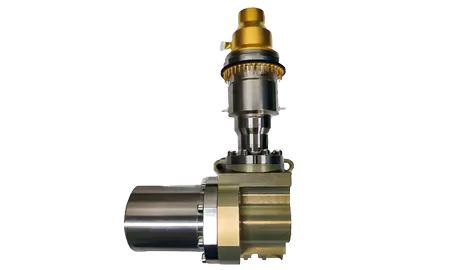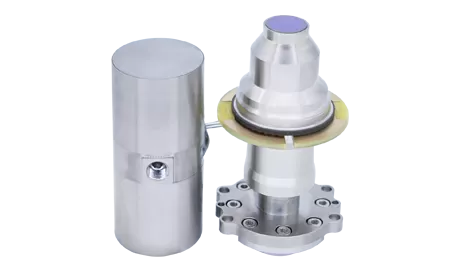
With the continuous technological iteration and cost reduction of infrared night vision devices, this cutting-edge technology has been widely applied in industrial operation and maintenance, infrastructure monitoring, traffic travel, home security and ecological protection. Featuring all-weather blind-spot-free imaging, accurate invisible hazard identification and strong extreme environment adaptability, infrared night vision technology makes up for the shortcomings of night industrial inspection, night travel risks and home security loopholes, and has become a key intelligent technology to ensure industrial safety production and improve daily safety standards for the public.
Industrial production and infrastructure operation and maintenance are core civil application scenarios of infrared night vision technology. Nighttime witnesses a high incidence of equipment failures and potential safety hazards, while manual inspection is insufficient during night hours. Most early industrial hazards only present invisible problems such as abnormal local equipment temperature and micro pipeline leakage without obvious appearance changes, which cannot be detected by traditional manual inspection. These hidden risks may easily cause circuit fires, equipment shutdowns, pipeline explosions and toxic gas leakage. With accurate heat sensing capability, infrared night vision temperature measurement technology enables non-contact, 24-hour and automatic equipment monitoring, accurately capturing various invisible safety hazards and preventing industrial accidents from the source.
The power industry is a key application scenario for industrial infrared night vision technology. Core outdoor power facilities, including high-voltage transmission lines, transformers, distribution boxes and power base stations, are prone to hidden faults such as line aging, overheated joints and equipment overload due to long-term exposure to wind, rain and temperature changes. Through regular night inspection with infrared night vision equipment, operation and maintenance personnel accurately locate abnormal temperature points, eliminate potential power faults in advance, and avoid night power outages, circuit fires and equipment damage, ensuring the stable, safe and efficient operation of the power grid system.
High-risk industries such as petroleum, chemical engineering and gas have extremely low safety fault tolerance. Tiny hidden dangers may trigger major safety accidents leading to casualties and property losses. The 24-hour infrared night vision monitoring system tracks the operating status of production equipment, oil and gas transmission pipelines and closed production workshops in real time. It instantly identifies risks including micro pipeline leakage, excessive equipment temperature and local abnormal heating, and sends early warning signals timely. This allows staff to eliminate hidden dangers quickly and prevent flammable, explosive and toxic leakage accidents, maintaining the safety bottom line of high-risk industrial production.
Furthermore, infrared night vision technology is widely used in infrastructure operation and ecological safety protection. In forest fire prevention, it monitors forest heat sources day and night, detects sporadic small fires and smoldering hidden dangers in advance, and effectively curbs the spread of forest fires. In water conservancy engineering, it real-timely monitors dam leakage, wall damage and facility aging to ensure the safety of water conservancy infrastructure. In port and park operation and maintenance, all-weather infrared monitoring tracks equipment abnormalities and illegal intrusion behaviors, realizing early detection, early warning and early disposal of hidden dangers and ensuring long-term stable operation of infrastructure.
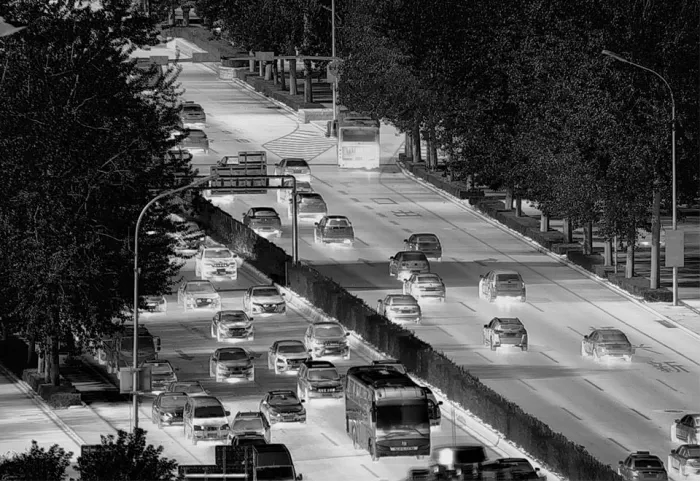
In daily civil scenarios, infrared night vision technology is fully integrated into public life, greatly improving night travel and home safety. Night driving is a high-risk traffic scenario. Dark vision, road lighting blind spots, dazzling high beams and night fog and dust easily cause rear-end collisions, crashes and pedestrian injuries. Vehicle-mounted infrared night vision systems are immune to light and weather changes. They clearly capture pedestrians, non-motor vehicles and road obstacles, predict potential road risks in advance, reserve sufficient reaction time for drivers, and significantly reduce the incidence of night traffic accidents to protect travel safety.
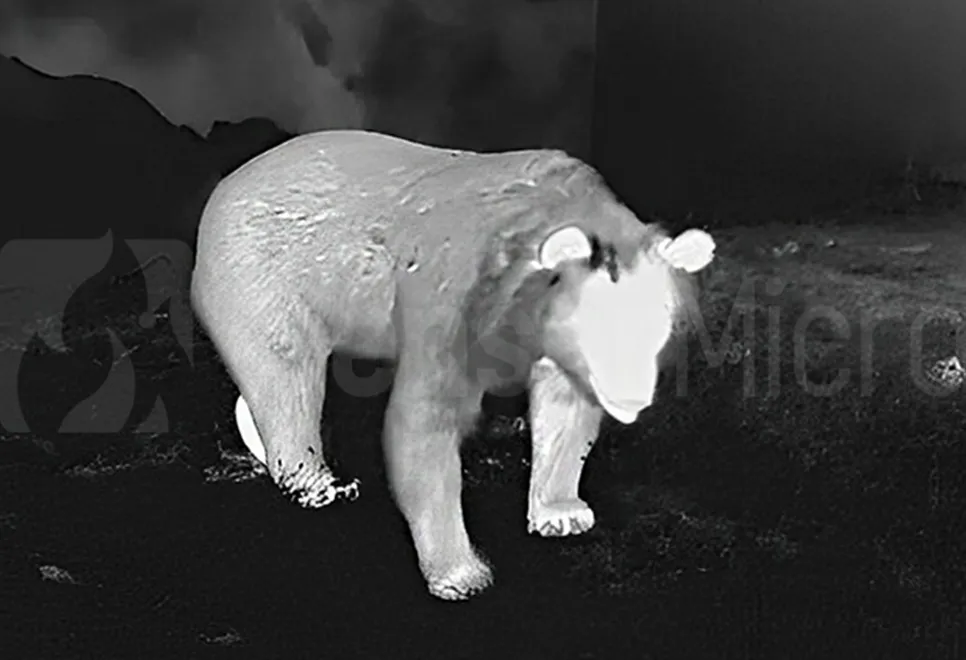
The popularity of mini civil infrared night vision devices has comprehensively upgraded modern home security and outdoor safety systems. Household infrared surveillance cameras provide 24-hour uninterrupted monitoring for courtyards, corridors and indoor spaces, accurately identifying night illegal intrusion and abnormal movements and pushing real-time early warning alerts to prevent burglary and unauthorized access. For outdoor camping, night fishing and field operations, portable infrared night vision equipment helps users observe the surrounding environment clearly and avoid unknown night risks. In addition, this technology is applied to wildlife monitoring and ecological protection, supporting all-weather night monitoring without disturbing biological habitats and damaging the natural ecology, balancing safety protection and ecological conservation.
At present, infrared night vision technology is deeply integrated with artificial intelligence, high-definition imaging, intelligent early warning and big data technology, developing rapidly towards miniaturization, intelligence, high precision and low cost. It fills the night safety gaps in civil scenarios, covering precise hazard prevention in industrial production, all-weather infrastructure maintenance, daily travel protection and home security. With continuous technological upgrading and popularization, infrared night vision technology will expand to more civil and industrial scenarios, and continuously protect industrial production stability and public daily safety with all-weather and high-precision safety protection capabilities.


 CN
CN
 EN
EN