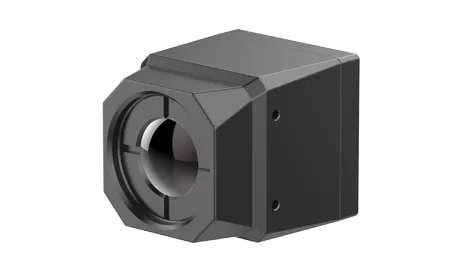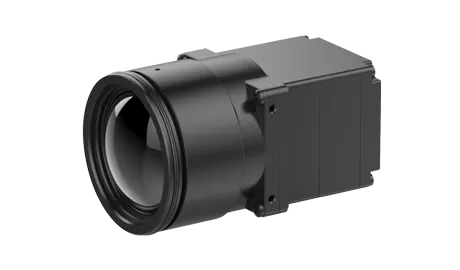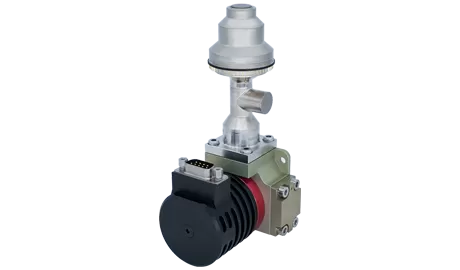
An infrared lens is one of the most important components in an infrared thermal imaging system. While the infrared detector determines how thermal radiation is converted into electrical signals, the lens determines how much of that radiation reaches the detector and how the target is presented in the image. As a result, infrared lens selection directly affects image quality, detection distance, spatial resolution, measurement accuracy, and overall system performance.
For applications ranging from industrial inspection and predictive maintenance to security surveillance and intelligent transportation, choosing the right infrared lens requires more than simply selecting a suitable focal length. Parameters such as focal length, field of view (FOV), F-number, spatial resolution, and instantaneous field of view (IFOV) must all be considered together.
This guide explains the most important infrared lens parameters and how to match them with different thermal imaging applications.
Understanding the Key Parameters of an Infrared Lens
The three most important factors when selecting an infrared lens are focal length and field of view, F-number and light-gathering capability, and spatial resolution and IFOV. These parameters work together to determine how far a thermal imaging system can see, how much area it can cover, and how small a target it can distinguish.
Focal Length and Field of View: Balancing Coverage and Detail
Focal length is the distance between the optical center of a lens and its focal point, usually measured in millimeters. It has a direct relationship with the field of view (FOV) and detection distance. A shorter focal length produces a wider field of view, allowing the camera to observe a larger area. A longer focal length creates a narrower field of view, concentrating the available pixels on a smaller region and enabling better observation of distant targets. This creates a fundamental trade-off in infrared lens selection. A short-focal-length wide-angle lens is suitable for applications that require broad-area observation and rapid target searching. It can capture more of the surrounding environment at once, making it useful for forest monitoring, surveillance, building inspection, and other applications where situational awareness is more important than fine target detail. A long-focal-length telephoto lens, on the other hand, provides a narrower field of view but offers better long-distance observation. It is particularly useful for monitoring specific targets from a distance, such as power transmission equipment, industrial facilities, or distant vehicles.
For applications that require both wide-area searching and detailed target identification, a zoom infrared lens can provide greater flexibility. By continuously adjusting focal length, a zoom system can switch from wide-area scanning to precise target observation without changing the lens. The trade-off is that zoom lenses generally have more complicated optical and mechanical structures and therefore tend to be more expensive.
F-Number and Light Gathering: A Key Factor in Thermal Sensitivity
The F-number, or F/#, is calculated from the ratio of the focal length to the effective aperture diameter: F-number = Focal Length / Aperture Diameter
A smaller F-number means a larger aperture and greater light-gathering capability. In infrared imaging, this can have a significant influence on system sensitivity and signal-to-noise performance. For example, a lens with an F-number of F0.8 allows more infrared radiation to reach the detector than a lens with F2.0. This can be particularly beneficial when observing low-temperature targets or environments where the thermal signal is relatively weak.
Low-F-number infrared lenses are therefore often suitable for nighttime observation, outdoor surveillance, low-temperature measurement, and other weak-radiation scenarios. A larger F-number can be advantageous when observing extremely hot targets. In high-temperature industrial environments, excessive infrared radiation can cause image saturation. An appropriately selected larger-aperture ratio can help the system maintain useful image information and preserve details in high-temperature regions. The choice of F-number should therefore be based on both the target temperature and the performance characteristics of the infrared detector.
Spatial Resolution and IFOV: Determining the Smallest Detectable Target
Another critical factor in infrared lens selection is spatial resolution, which is closely related to the lens's instantaneous field of view, or IFOV. A simplified relationship can be expressed as: IFOV = Pixel Size / Focal Length
The smaller the IFOV, the smaller the target that can theoretically be resolved at a given distance. For example, a thermal imaging system using a small-pixel detector combined with an appropriate long-focal-length lens can achieve a smaller IFOV and therefore distinguish finer details. This is particularly important for applications such as electronic component inspection, PCB inspection, semiconductor manufacturing, and precision industrial measurement, where the target may occupy only a small portion of the image. For large-scale temperature monitoring, however, extremely high spatial resolution may not always be necessary. If the objective is to observe the overall temperature distribution of a large machine, building, or industrial facility, a wider field of view can provide more useful information than maximizing pixel-level detail. In other words, the best infrared lens is not necessarily the one with the highest spatial resolution. It is the one that matches the size, distance, and characteristics of the target.
Infrared Lens Selection Should Start with the Application
There is no universally "best" infrared lens. The correct choice depends on how the thermal imaging system will actually be used. If the priority is wide-area observation, a short focal length and wide FOV are usually preferable. If the priority is long-distance target detection, a longer focal length and narrower FOV may provide better results. For weak thermal signals, a low F-number can increase the amount of infrared radiation reaching the detector. For small targets, IFOV and spatial resolution become critical selection criteria. It is also important to consider the lens and detector as an integrated optical system. Detector pixel size, resolution, spectral response, F-number, focal length, working distance, and target temperature all influence the final imaging performance.
Conclusion
Infrared lens selection is a critical step in designing a high-performance thermal imaging system. Focal length and FOV determine coverage and detection distance, F-number affects light-gathering capability and sensitivity, while spatial resolution and IFOV determine the ability to distinguish small targets. For industrial inspection, the right lens can help identify high-temperature anomalies and microscopic thermal defects. In security surveillance, an appropriately selected LWIR lens can provide reliable nighttime and long-range detection. As infrared detectors continue to become smaller, higher resolution, and more sensitive, infrared optics will also evolve toward more compact, higher-performance, and application-specific designs. By selecting the lens according to the target size, working distance, temperature, environment, and required level of detail, engineers can build thermal imaging systems that deliver better image quality, more reliable measurements, and stronger overall performance.


 CN
CN
 EN
EN