When evaluating an infrared thermal imaging camera or camera core, users often focus on detector resolution, thermal sensitivity (NETD), or lens options. However, another key specification can significantly impact system performance: frame rate.
Frame rate determines how smoothly thermal images are displayed and how effectively a camera captures moving objects or rapidly changing temperature fields. Whether you're performing electrical inspections, monitoring production lines, enabling autonomous driving, or conducting scientific research, selecting the appropriate frame rate is essential for achieving reliable results.
This article explains what frame rate means in infrared thermal imaging, how it affects performance, and which frame rates are best suited for different applications.
What Is Frame Rate in Infrared Thermal Imaging?
Frame rate, measured in Hertz (Hz) or frames per second (FPS), refers to the number of thermal images an infrared camera captures and displays every second.
For example, a thermal imaging module operating at 50 Hz captures 50 thermal images per second.
In simple terms. Higher frame rates produce smoother video, making it easier to track moving targets and observe rapidly changing temperature distributions. Lower frame rates are sufficient for stationary or slow-moving objects, where temperature changes occur gradually. The appropriate frame rate depends on the application rather than simply choosing the highest available value.
Choosing the Right Frame Rate for Different Applications
Different industries have different requirements for frame rate depending on target speed and temperature dynamics.
25–30 Hz: Ideal for Static and Slow-Moving Inspections
Frame rates between 25 and 30 Hz are the industry standard for many inspection applications involving stationary equipment or slowly changing temperatures. Typical applications include electrical inspections, building diagnostics, HVAC inspection, medical thermal imaging, predictive maintenance, and energy audits. These applications generally involve static targets where temperature changes occur gradually. A frame rate of 25 Hz provides smooth visualization while maintaining low power consumption and cost efficiency.
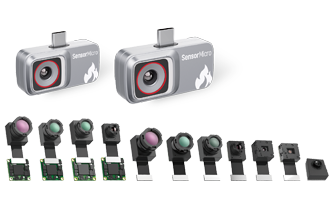
For static inspection scenarios, SensorMicro's Mini212G2 infrared module provides an excellent balance of performance, compactness, and affordability. Powered by SensorMicro's self-developed infrared detector, the Mini212G2 features an ultra-compact 17 × 17 mm PCB design and weighs only 4 grams, making it ideal for space-constrained systems. Its next-generation ISP image processing delivers clear thermal images directly from the module, while supporting temperature measurement accuracy of ±2°C, regional and full-screen temperature analysis, and multiple lens options for different fields of view. To simplify system integration, the Mini212G2 supports a wide range of industry-standard interfaces, including USB 2.0, MIPI, DVP, BT.656, and LVDS, making it suitable for industrial equipment, handheld devices, and embedded thermal imaging solutions.
50–60 Hz: Designed for Dynamic Monitoring
Applications involving moving objects require smoother image updates and faster response. A frame rate of 50–60 Hz is commonly used in security surveillance, intelligent transportation, high-speed manufacturing, machine vision, autonomous driving, and robotics. In these environments, objects move quickly, and temperatures may change rapidly. Higher frame rates reduce image lag and motion blur, allowing operators and intelligent systems to react more accurately.
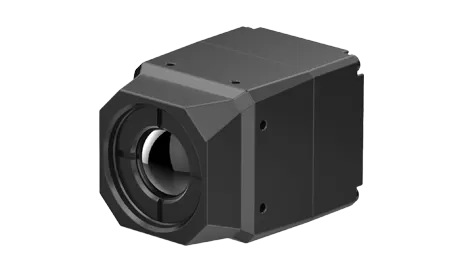
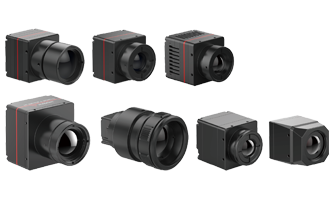
For demanding dynamic applications, SensorMicro's iSE1212 infrared camera core is an ideal solution. Built around a 1280 × 1024 / 12 μm ceramic infrared detector, the iSE1212 delivers megapixel thermal imaging with a wider field of view, longer detection range, and richer image detail. The camera core also features shutterless operation, eliminating interruptions from shutter calibration and reducing noise during continuous observation. Additional functions such as super-resolution imaging, picture-in-picture display, customizable OSD, electronic zoom, and sleep mode provide exceptional flexibility for high-end thermal imaging systems. Multiple video interfaces and lens configurations make integration straightforward across various industrial and security platforms.
100 Hz and Above: High-Speed Scientific and Industrial Applications
Some applications require capturing extremely rapid thermal events that occur within milliseconds. Frame rates of 100 Hz or higher are typically used for scientific research, ballistics testing, aerospace experiments, high-speed industrial processes, material analysis, and explosion and combustion studies. These applications rely on very short detector integration times combined with extremely high detector sensitivity to capture transient thermal phenomena that would be missed at conventional frame rates.
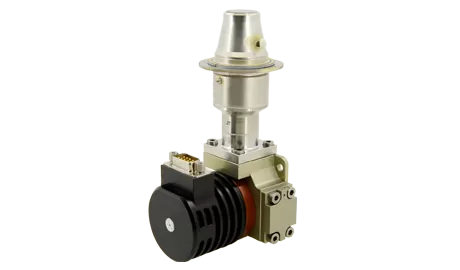
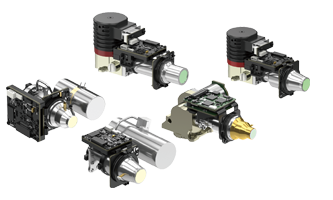
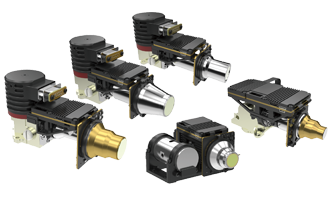
For advanced research and long-range observation, SensorMicro offers a cooled infrared camera core capable of up to 200 Hz frame rates. The system integrates a 640 × 512 / 15 μm Type-II Superlattice (T2SL) long-wave cooled infrared detector, providing outstanding sensitivity for demanding thermal imaging applications.
With multiple built-in image processing algorithms, support for mainstream video interfaces, and flexible system integration, this camera core is an excellent choice for high-performance long-wave infrared electro-optical systems requiring both high speed and exceptional image quality.
How to Select the Best Frame Rate
Choosing the right frame rate is ultimately about matching the camera to the application. For routine inspections of stationary equipment, a frame rate of 25–30 Hz offers excellent performance without unnecessary hardware costs or power consumption. When monitoring moving vehicles, production lines, or security environments, 50–60 Hz provides smoother video and more accurate target tracking. Only highly specialized scientific, aerospace, or industrial applications generally require frame rates above 100 Hz, where capturing extremely fast thermal events is essential. Rather than pursuing the highest frame rate available, users should evaluate target movement speed, rate of temperature change, required response time, power consumption, system cost, and integration requirements.
Selecting the appropriate frame rate ensures optimal performance while avoiding unnecessary system complexity.
Conclusion
Frame rate is one of the most important specifications for evaluating an infrared thermal imaging system's ability to capture dynamic events. While higher frame rates provide smoother visualization and better tracking of moving targets, they do not directly improve the quality of individual thermal images.
The best choice depends on the application's specific requirements. Static inspections benefit from 25–30 Hz, dynamic monitoring is best served by 50–60 Hz, and high-speed scientific or industrial research often requires 100 Hz or more.
With a comprehensive portfolio ranging from the compact Mini212G2, to the high-resolution iSE1212, and advanced 200 Hz cooled infrared camera cores, SensorMicro provides thermal imaging solutions tailored to applications across industrial inspection, security, automation, scientific research, and beyond. By selecting the right frame rate for the job, users can achieve the ideal balance of performance, efficiency, and cost.


 CN
CN
 EN
EN