Background
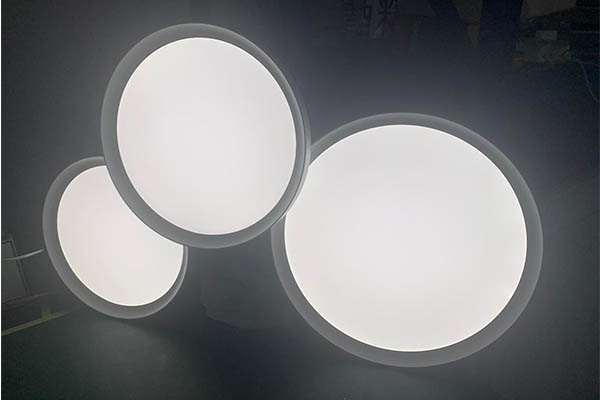
The customer is a manufacturer specializing in LED lighting products, including commercial lighting fixtures, industrial lamps, and customized lighting solutions. During the product development and quality inspection process, the company needed an efficient method to evaluate the thermal performance of LED lamps.
As LED lighting systems become more compact and powerful, heat management has become increasingly important. Excessive heat accumulation can affect lighting efficiency, product reliability, and service life. The customer required a fast and reliable solution to visualize heat distribution and identify potential thermal issues during testing.
Challenges
Before adopting infrared thermal imaging, the customer mainly relied on traditional temperature measurement methods, such as contact thermometers and temperature sensors. These methods had several limitations:
Limited measurement coverage: Contact sensors could only measure temperature at specific points and could not provide a complete view of heat distribution.
Lack of visual information: Temperature differences across the lamp body were difficult to observe directly.
Low testing efficiency: Manual sensor installation and repeated measurements increased inspection time.
Difficulty identifying hotspots: Potential overheating areas could be missed during conventional testing.
With increasing requirements for energy efficiency and product reliability, the customer needed a faster approach to analyze LED lamp thermal performance.
Solution
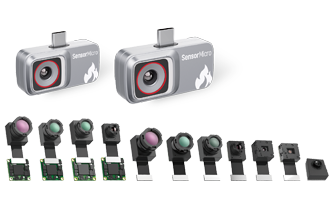
To improve thermal testing efficiency, the customer integrated an infrared thermal imaging solution into their LED lamp evaluation process.
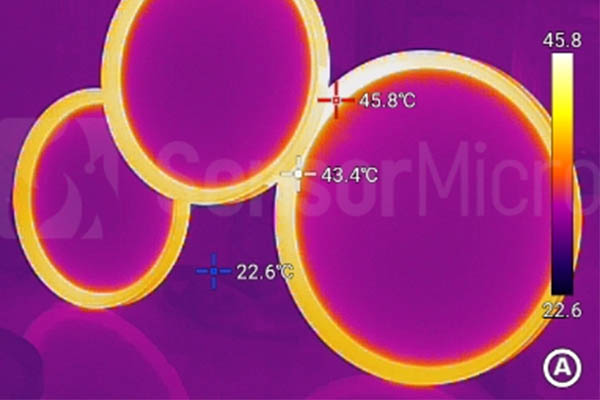
By using a thermal imaging device, the testing team was able to:
Capture the overall temperature distribution of LED lamps in real time
Visualize heat variations across different areas of the lamp body through thermal images
Quickly locate high-temperature regions and identify potential thermal issues
Evaluate whether the heat dissipation design was balanced and effective
Unlike traditional contact measurement methods, infrared thermal imaging provides non-contact temperature measurement, allowing engineers to quickly understand the thermal behavior of the entire lighting product without affecting normal operation.
After implementing thermal imaging technology, the customer significantly improved testing efficiency and reduced the time required for thermal analysis. Real-time visualization of heat distribution helped engineers identify design problems earlier, optimize heat dissipation structures, and improve product reliability.
For LED lighting manufacturers, effective thermal management is essential to maintaining high performance and extending product lifetime. Infrared thermal imaging provides a fast, accurate, and efficient method for evaluating lamp temperature distribution, supporting better product design and quality control.
Note: Infrared thermal imaging measures the surface temperature of objects. Since infrared radiation cannot penetrate materials such as metal or glass, thermal cameras are mainly used for analyzing external surface temperature. To inspect internal components, the lamp housing or relevant parts may need to be opened before measurement.


 CN
CN
 EN
EN