Customer Industry: Steel and Metallurgy
Application Scenario: Coke Oven Lining Inspection
Background
A coke oven is a key piece of equipment in the coking process, where coal is heated in the absence of air to produce coke. A modern coke oven consists of multiple functional sections, including coking chambers, combustion chambers, regenerator chambers, flues, the oven roof, and flues and ducts.
The refractory lining inside the coke oven plays an important role in maintaining high-temperature operation and protecting the oven structure. During long-term operation, however, the refractory material may develop cracks, local thinning, erosion, or partial detachment. These defects can affect heat transfer and may cause abnormal temperature increases on the outer surface of the oven.
For steel and coke producers, detecting coke oven lining defects at an early stage is important for maintaining equipment safety, reducing unplanned maintenance, and supporting stable long-term operation.
Challenges
Traditional coke oven inspection methods can make it difficult to identify the exact location and severity of hidden lining defects. Since the refractory lining is located inside the oven, direct inspection is often difficult during normal operation.
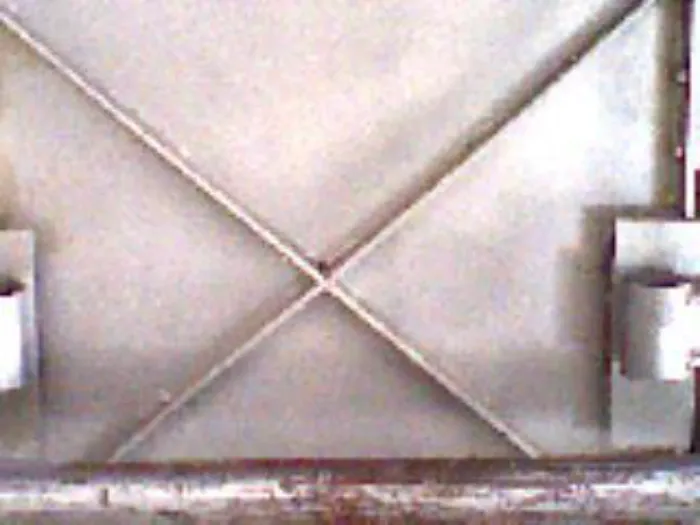
Potential problems include:
Hidden lining defects: Cracks, erosion, thinning, and refractory detachment may develop inside the oven.
Localized overheating: Damaged refractory material can allow more heat to reach the oven shell, creating abnormal hot spots.
Large inspection area: A coke oven contains multiple chambers and heating sections, making manual inspection time-consuming.
Difficult temperature comparison: Small temperature differences across large surfaces can be difficult to identify using conventional inspection methods.
As a result, an effective inspection method needs to cover large areas while providing clear information about temperature distribution.
Solution
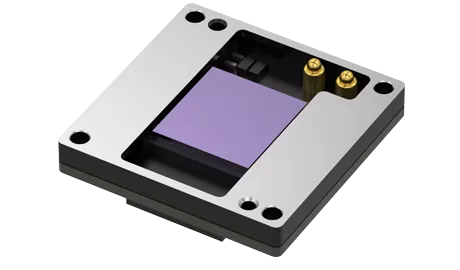
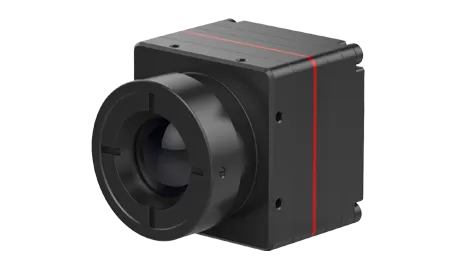
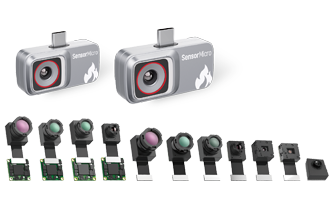
To improve coke oven inspection, the customer introduced an industrial infrared thermal imaging camera from SensorMicro to monitor the temperature distribution across the outer surface of the coke oven.
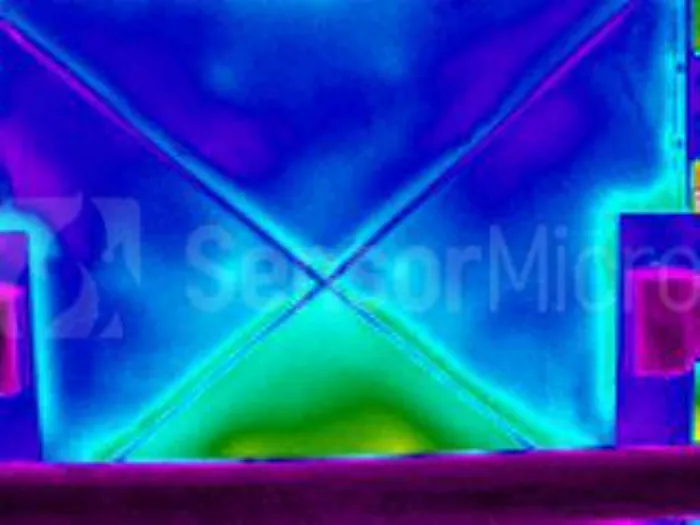
Infrared thermal imaging provides non-contact temperature measurement and converts infrared radiation from the oven surface into a visible thermal image. By scanning different sections of the oven and comparing temperature patterns, inspectors can identify abnormal hot areas that may indicate refractory lining problems.
During the inspection, the thermal imaging camera scans the outer surface of the coke oven and captures its temperature distribution in real time. Areas with abnormal temperatures can be quickly identified by comparing them with surrounding or normally operating sections. The thermal image also provides information on the location, maximum temperature, and approximate size of overheated areas, giving inspectors a clearer view of where refractory damage may have occurred and how serious it could be. By analyzing these temperature patterns, the inspection team can locate potential cracks, erosion, local thinning, or detachment of the refractory lining without direct contact with the high-temperature structure.
When a section of refractory material becomes cracked, eroded, detached, or locally thinner, more heat can be transferred toward the oven shell. This can create a noticeable temperature anomaly on the outer surface. Infrared thermal imaging captures this anomaly without requiring direct contact with the high-temperature structure.
Results
After introducing infrared thermal imaging, the customer gained a more efficient way to inspect coke oven surfaces and identify potential refractory lining defects. Instead of relying only on individual measurement points, inspectors can visualize temperature distribution across a much larger area in a single thermal image.
The technology helps detect abnormal hot spots at an early stage, locate potential lining damage, and provide temperature data for maintenance assessment. This allows maintenance teams to better understand the condition of the coke oven and take action before a localized defect develops into a more serious problem.
For steel and metallurgy companies, infrared thermal imaging provides a practical non-contact method for coke oven inspection. By combining thermal images with temperature analysis and regular monitoring, it can support predictive maintenance, improve inspection efficiency, and help maintain the safe and stable operation of coke oven equipment.


 CN
CN
 EN
EN