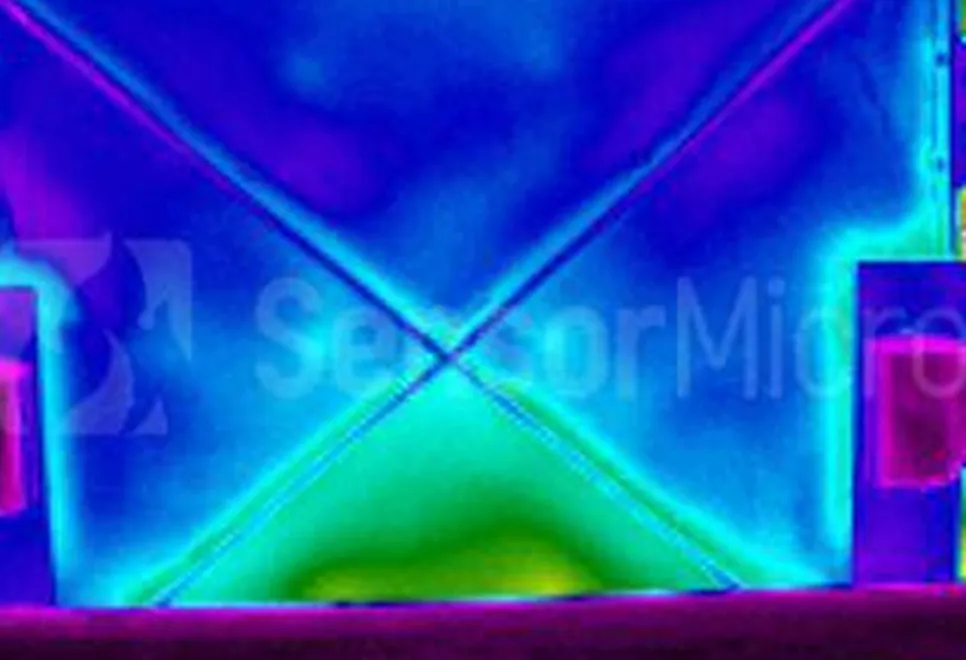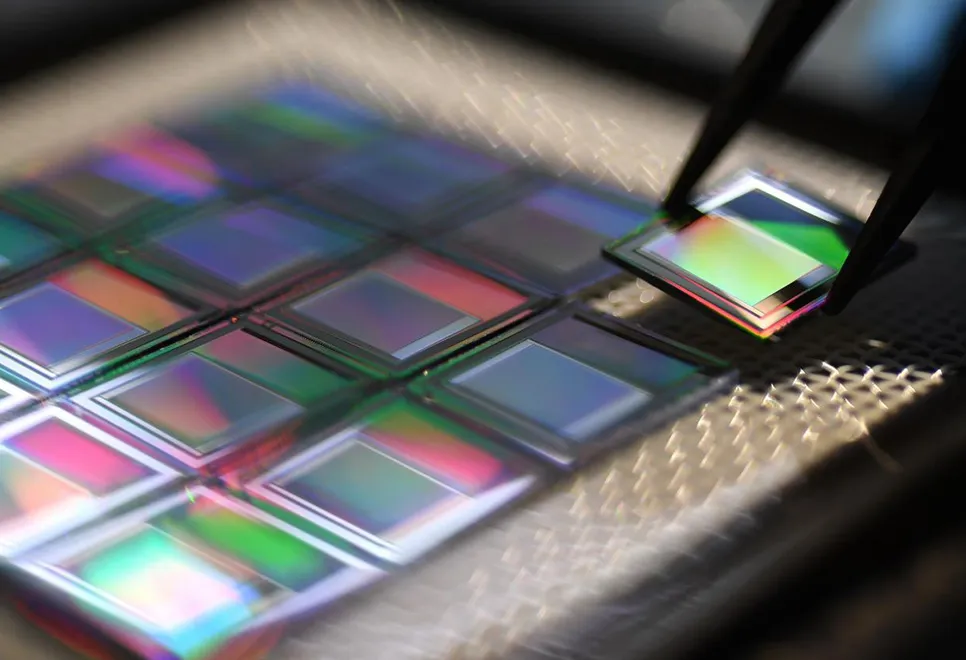
Infrared thermal imaging allows cameras to detect heat that cannot be seen by the human eye. Unlike visible cameras, thermal cameras do not need visible light to form an image. Instead, they detect infrared radiation emitted by objects and convert that radiation into an image.
Among the different infrared bands used for thermal imaging, mid-wave infrared (MWIR) and long-wave infrared (LWIR) are two of the most important. These two bands are both widely used for thermal imaging, but they do not provide exactly the same performance.
So, what is the difference between MWIR and LWIR? Why are some thermal cameras designed for MWIR while others use LWIR? And which one is better for long-range imaging, temperature measurement, industrial inspection, or security applications?
The answer depends on the target, temperature, environment, required range, detector technology, and overall system design. There is no single infrared band that is best for every application.
What are MWIR and LWIR?
MWIR stands for Mid-Wave Infrared, while LWIR stands for Long-Wave Infrared. The names describe different parts of the infrared spectrum.
MWIR thermal imaging normally covers wavelengths from approximately 3 to 5μm. LWIR thermal imaging generally covers approximately 8 to 14μm, although the exact spectral range can vary between detectors and camera systems. These ranges correspond to two important atmospheric transmission windows. Infrared radiation between about 5 and 8μm is strongly affected by atmospheric absorption, especially from water vapor, which is why it is not commonly used as a general-purpose thermal imaging band.
The difference between these bands is not simply a matter of wavelength. It is closely related to the temperature of the objects being observed. All objects above absolute zero emit electromagnetic radiation. As an object's temperature increases, the wavelength at which its radiation peaks moves toward shorter wavelengths. This relationship is described by Wien's displacement law. NASA references the same principle in its thermal radiation studies: the peak wavelength is approximately inversely proportional to absolute temperature.
For example, an object at around 300 K (about 27°C) has a peak thermal emission near 9.7μm, which falls within the LWIR band. At around 700 K (about 427°C), the peak moves to approximately 4.1μm, which is within the MWIR band. This helps explain why LWIR is highly effective for detecting objects near ambient temperature, while MWIR becomes particularly useful for hotter targets.
MWIR vs. LWIR: The Basic Difference
The most important difference between MWIR and LWIR is the type of thermal information that each band captures most effectively.
MWIR is particularly sensitive to elevated-temperature targets. Hot engines, exhaust gases, flames, furnaces, and other high-temperature objects can produce strong radiation in the 3–5μm range. This can create high thermal contrast between a hot target and a cooler background.
LWIR is particularly well suited to ambient-temperature targets. People, buildings, vehicles, equipment, and many outdoor objects radiate strongly in the 8–14μm range. This is one reason LWIR has become a widely used band for general-purpose thermal imaging. LWIR is an important band for outdoor security, long-range surveillance, and firefighter applications.
This does not mean that MWIR cannot detect people or that LWIR cannot image hot objects. Both technologies can detect thermal radiation across a range of temperatures. The difference is where each band can provide stronger or more useful thermal signals under a given condition.
Characteristic | MWIR | LWIR |
Typical wavelength | 3–5μm | 8–14μm |
Thermal contrast | Strong for many hot targets | Strong for many near-ambient targets |
System complexity | Generally higher when cooled | Lower for uncooled systems |
Typical applications | High-temperature imaging, long-range imaging, gas imaging | Security, inspection, thermography, monitoring |
Power and size | Usually higher for cooled systems | Often lower for uncooled systems |
The table is a general technical comparison rather than a rule for every camera. Detector material, pixel size, optical design, cooling technology, image processing, and operating conditions can all change actual system performance.
Why is MWIR Useful for Long-Range Imaging?
One of the main advantages of MWIR is its ability to provide strong thermal contrast from elevated-temperature targets. This can be valuable when a target is far away and occupies only a small portion of the image.
For example, a hot engine or exhaust plume can have a much stronger MWIR signal than the surrounding background. With an appropriate detector and optical system, this contrast can help a thermal camera detect and track targets at long distances.
MWIR can also benefit from shorter wavelengths when optical aperture and other system parameters are comparable. The diffraction-limited angular resolution of an optical system is related to wavelength. A shorter wavelength can therefore support finer theoretical angular resolution for a given aperture. In real systems, however, this advantage should not be considered in isolation. Detector resolution, pixel pitch, focal length, aperture, focus, atmospheric transmission, stabilization, and image processing all affect the final image.
This is why saying that “MWIR always sees farther than LWIR” would be misleading. Long-range performance is a property of the complete thermal imaging system, not wavelength alone.
Why is LWIR So Widely Used?
LWIR has a major advantage for many everyday thermal imaging applications: objects around room temperature emit a large portion of their thermal radiation in this wavelength range.
A person at approximately 300K, for example, has peak blackbody radiation near 9.7μm. This is close to the center of the LWIR atmospheric window. As a result, an LWIR camera can detect people and other objects without requiring them to be significantly hotter than the environment.
Another important advantage is the availability of uncooled LWIR detectors, especially microbolometers. An uncooled detector operates without a cryogenic cooler, which can greatly simplify the camera architecture. It can reduce system size, weight, power consumption, and cost.
This makes uncooled LWIR particularly attractive for applications where compact size, low power consumption, easy integration, and cost efficiency are important.
MWIR vs. LWIR in Different Environmental Conditions
Wavelength is only one part of thermal imaging performance. The atmosphere between the target and the camera can have a major impact, especially at long distances.
Water vapor and other atmospheric gases absorb infrared radiation at specific wavelengths. This is why thermal imaging systems are normally designed around atmospheric transmission windows rather than simply choosing any wavelength in the infrared spectrum. The two major thermal windows are approximately 3–5μm and 8–14μm.
In clear air, both MWIR and LWIR can provide excellent thermal images. In humid, hazy, foggy, smoky, or dusty environments, however, their performance can change.
It is tempting to say that one band is always better in bad weather, but the reality is more complex. Atmospheric transmission depends on the type and density of the particles, water vapor, temperature, path length, and visibility conditions. Published modeling and thermal imaging studies show that the relative advantage of MWIR and LWIR can change with environmental conditions. For system designers, this leads to an important principle: do not select MWIR or LWIR based on wavelength alone. The expected environment and operating distance should be considered at the beginning of the design process.
Cooled MWIR vs. Uncooled LWIR
Another major difference between many MWIR and LWIR systems is detector technology.
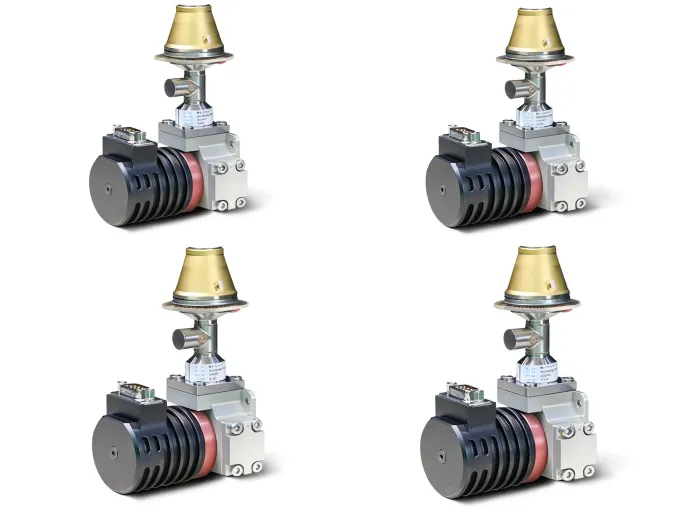
High-performance MWIR cameras commonly use cooled photon detectors, such as InSb or HgCdTe (MCT). Cooling the detector reduces detector noise and allows the system to achieve high sensitivity. This is especially useful when the camera needs to detect small thermal differences or weak signals from distant targets.
The trade-off is system complexity. A cooled camera requires a cooling system and associated electronics. This generally increases size, weight, power consumption, cost, and integration requirements.
LWIR cameras, on the other hand, can use uncooled microbolometers. These detectors operate near room temperature and do not require a cryogenic cooler. This makes them well suited to compact and low-power thermal imaging products.
However, this does not mean that all MWIR cameras are cooled or all LWIR cameras are uncooled. Cooled LWIR detectors are also used in high-performance systems, while advances in detector technology continue to improve the performance of uncooled sensors.
The right comparison is therefore not simply “MWIR equals cooled” and “LWIR equals uncooled.” Instead, it is better to consider spectral band and detector architecture as two related but separate design choices.
MWIR vs. LWIR for Temperature Measurement
The choice between MWIR and LWIR can also affect temperature measurement.
For ordinary objects near room temperature, LWIR is naturally well matched to their peak thermal emission. This makes LWIR a practical choice for many applications such as building inspection, electrical equipment inspection, machinery monitoring, and general thermography.
MWIR can become especially useful when the target temperature is much higher. NASA's thermal imaging research provides a clear physical example: a 300K surface has peak radiance near 10μm, while a 700K surface peaks near 4μm.
This is one reason MWIR cameras are often used for high-temperature industrial processes, furnace monitoring, flame observation, and other applications where the target can reach several hundred degrees Celsius or higher.
However, accurate temperature measurement is not determined by wavelength alone. Emissivity, reflected radiation, viewing angle, atmospheric attenuation, calibration, detector response, and the optical system all affect the final measurement. A thermal camera should therefore be evaluated based on the complete measurement task rather than its spectral band alone.
MWIR and LWIR for Optical Gas Imaging
MWIR and LWIR can also be used for gas detection, but the operating principle is somewhat different from conventional thermal imaging.
Many gases absorb infrared radiation at specific wavelengths. If a gas cloud has a strong absorption feature within the spectral response of a camera, an infrared imaging system can detect changes in radiation caused by the gas.
Some volatile organic compounds, for example, have absorption features around the MWIR region. This is why MWIR optical gas imaging (OGI) is widely used for visualizing certain hydrocarbon gas leaks.
LWIR can also be useful for gas imaging because many gases have characteristic absorption features in the long-wave infrared region. The exact band, filter, detector material, and optical design should be selected according to the gas being detected.
This is an important example of why “MWIR vs. LWIR” cannot be reduced to a simple performance ranking. In gas imaging, the key question is often not which band is better in general, but which spectral feature contains the information needed to detect the target gas.
Which Is Better: MWIR or LWIR?
There is no universal winner between MWIR and LWIR.
If the application involves hot targets, high-temperature processes, strong thermal contrast, fast dynamic scenes, or demanding long-range imaging, MWIR can offer significant advantages, especially when paired with a high-performance cooled detector and suitable optics.
If the application focuses on ambient-temperature targets, compact system design, low power consumption, cost efficiency, or general-purpose thermal imaging, LWIR is often the more practical choice. Uncooled LWIR detectors make it possible to build small and efficient thermal imaging systems for a wide range of applications.
For example, a compact industrial inspection camera may benefit more from an uncooled LWIR detector than from a cooled MWIR system. A high-temperature industrial monitoring system may have the opposite requirement. A long-range imaging system may need to evaluate both bands together with focal length, aperture, pixel pitch, detector sensitivity, and atmospheric conditions before making a final decision.
MWIR vs. LWIR: How to Choose the Right Technology
The best way to choose an infrared band is to start with the application rather than the detector.
First, define what you need to see. Is the target close to ambient temperature, or does it generate significant heat? Next, consider the distance between the target and the camera. A short-range inspection task and a long-range imaging task can have very different requirements.
Environmental conditions are equally important. Humidity, fog, smoke, dust, temperature, and atmospheric path length can all influence the infrared signal that reaches the detector.
The system requirements also matter. If size, weight, power consumption, and cost are important, an uncooled LWIR solution may be attractive. If the system requires very high sensitivity, high-speed imaging, or strong performance on hot targets, a cooled MWIR solution may be worth the additional complexity.
Finally, the detector should not be evaluated separately from the lens and camera electronics. A high-resolution detector cannot deliver its full potential if the optical system does not provide sufficient resolution. In the same way, a highly sensitive detector cannot compensate for severe atmospheric attenuation over a long optical path.


 CN
CN
 EN
EN