Power substations are one of the most important parts of the electrical grid. They control voltage levels and distribute electricity safely to homes, factories, hospitals, and data centers. A single equipment failure can interrupt power for thousands of users and lead to expensive emergency repairs.
Many substation failures begin with a small temperature increase. A loose connection, overloaded conductor, aging insulation, or damaged switch contact often becomes hotter long before it fails completely. Because these problems are difficult to see during normal visual inspections, infrared thermal imaging has become one of the most widely used predictive maintenance tools in substations.
Unlike contact thermometers, thermal cameras measure surface temperature from a safe distance without shutting down equipment. This allows maintenance teams to identify abnormal heating while the substation remains in normal operation, reducing both inspection time and operational risk. Numerous studies have shown that thermal imaging is an effective non-destructive method for detecting early electrical faults before they develop into serious failures.
Why Do Substation Components Overheat?
Electrical equipment naturally produces heat during operation. However, excessive or uneven heating often indicates an abnormal condition.
One of the most common causes is a loose electrical connection. Increased resistance at the connection point creates localized heating that continues to rise under load. Overloaded circuits produce similar temperature increases because more current generates more heat than the equipment is designed to handle.
Aging insulation is another frequent problem. As insulation materials deteriorate over time, electrical losses increase and abnormal heat develops before visible damage appears. Moisture contamination, corrosion, and damaged contacts can also create hot spots that remain invisible to the naked eye.
Research on electrical equipment maintenance has shown that these thermal anomalies often appear well before complete equipment failure, making temperature monitoring an effective early warning method.
How Thermal Imaging Detects Hidden Problems
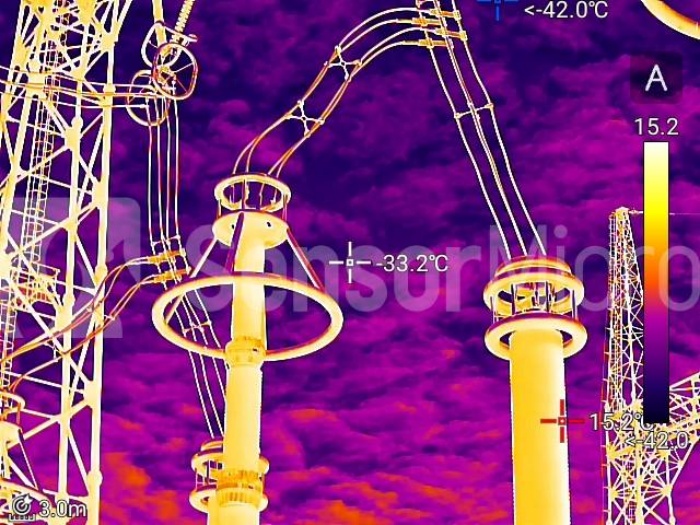
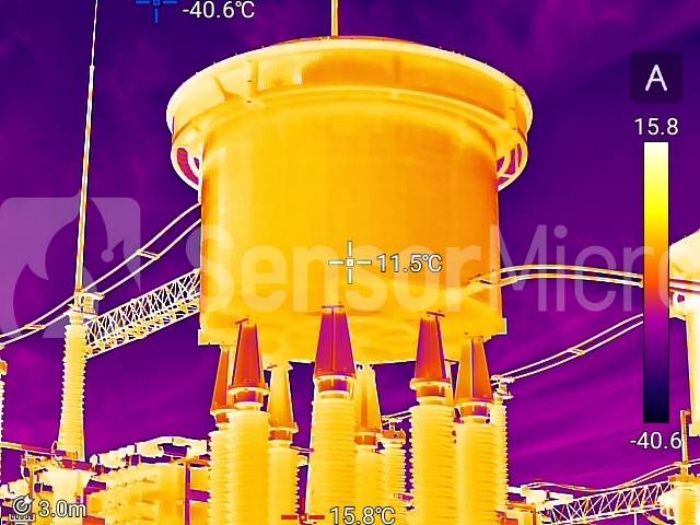
Every object above absolute zero emits infrared energy. A thermal camera converts this invisible radiation into a temperature image, allowing inspectors to quickly identify areas that are hotter than surrounding components.
During a routine inspection, engineers scan transformers, circuit breakers, disconnect switches, busbars, cable terminations, insulators, and connectors. Components operating under similar electrical loads should normally have similar temperatures. If one connection is significantly hotter than another identical connection nearby, it usually indicates a developing fault.
For example, if two busbar connections carry the same current but one measures 95°C while the other is 58°C, the 37°C temperature difference is a strong indication of excessive resistance or poor contact quality. Detecting this abnormality during a scheduled inspection allows maintenance before the connection overheats further or fails unexpectedly.
Because thermal cameras perform measurements without physical contact, inspections can often be completed while equipment remains energized, improving both efficiency and personnel safety.
Best Practices for Reliable Thermal Inspections
A thermal image is most valuable when collected under appropriate operating conditions. Equipment should carry sufficient electrical load because lightly loaded components may not generate enough heat to reveal developing faults. Environmental conditions such as strong wind, direct sunlight, or rain can also affect surface temperature measurements and should be considered during analysis.
Comparing similar components operating under the same conditions is often more reliable than relying only on absolute temperature values. Maintenance teams also benefit from recording thermal images during every inspection. Temperature trends over several months can reveal gradual deterioration that may not be obvious from a single image.
Researchers studying substation thermography have emphasized that inspection conditions—including electrical load and environmental factors—have a direct impact on the reliability of thermal analysis.
Thermal Imaging Supports Predictive Maintenance
Traditional maintenance often relies on fixed inspection schedules or repairs after equipment has already failed. Thermal imaging supports a predictive maintenance strategy by identifying developing problems before they become critical.
In one published study involving 150 thermal images collected from 10 operating substations, researchers analyzed approximately 300 thermal hot spots and demonstrated that infrared image analysis can effectively distinguish defective equipment from normal operating conditions using machine learning techniques.
By finding abnormal heating early, utilities can plan maintenance during scheduled outages instead of responding to unexpected failures. This reduces repair costs, improves equipment reliability, and minimizes service interruptions.


 CN
CN
 EN
EN