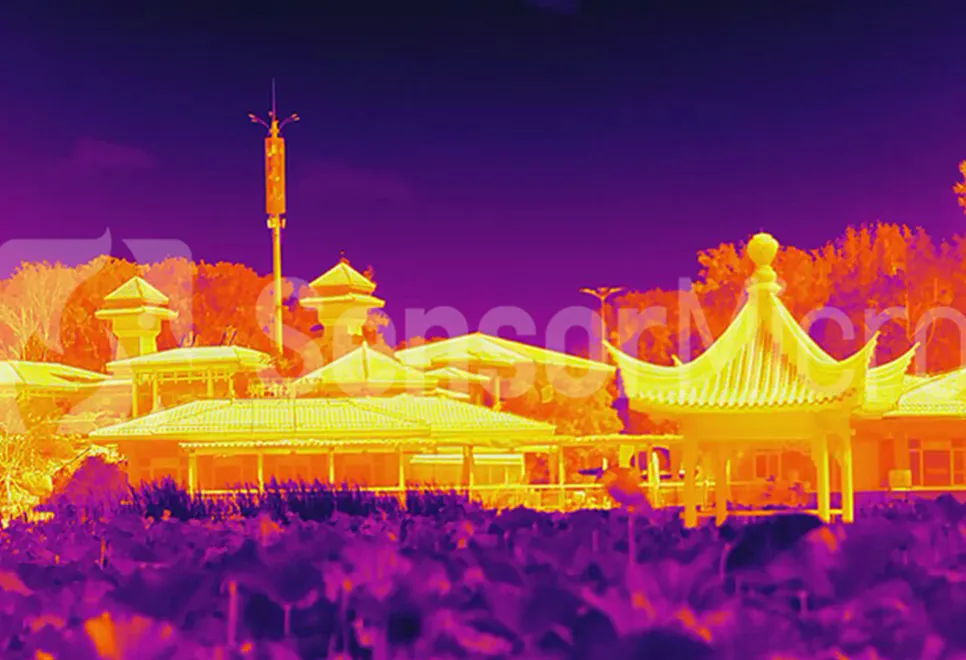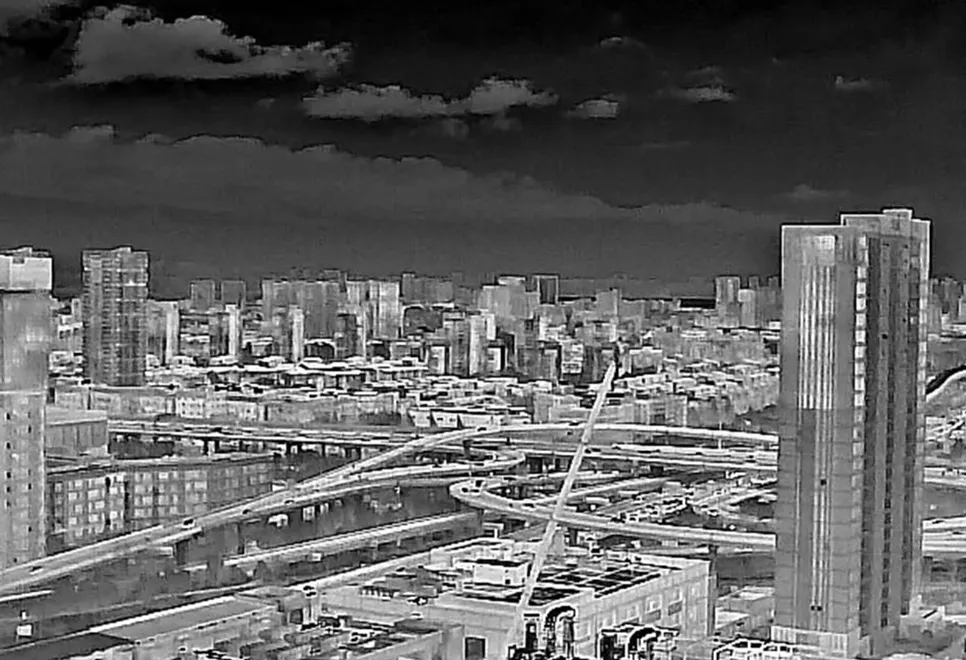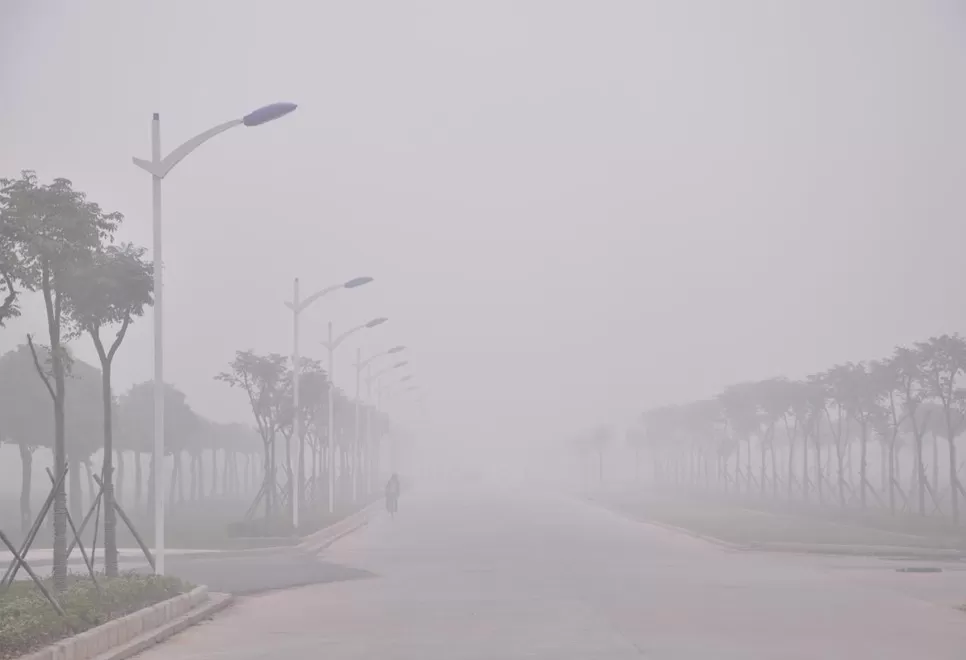
Fog is one of the biggest challenges for cameras used in driving, security monitoring, firefighting, and industrial inspection. A normal visible-light camera often loses detail quickly in dense fog because water droplets scatter light before it reaches the lens. This is why many people ask an important question: can infrared thermal imaging see through fog?
Recent research from the Journal of Imaging and Scientific Reports confirms that infrared cameras can maintain object detection capability even in very dense fog environments. Infrared thermal imaging performs much better than visible cameras in fog because it detects heat radiation instead of relying on reflected visible light.
Why Visible Cameras Fail in Fog
Fog is made of tiny suspended water droplets. These droplets scatter visible light strongly. When headlights or sunlight hit fog, the light bounces in many directions before reaching the camera sensor. As a result, the image becomes washed out and blurry.
This effect is easy to observe in autonomous driving systems. In severe fog, lane markings disappear, pedestrians become difficult to identify, and obstacle recognition distance drops sharply.
A thermal camera works differently. Instead of capturing reflected visible light, it detects infrared radiation emitted by objects themselves. Humans, vehicles, engines, animals, and machinery naturally emit heat energy. Because infrared wavelengths can penetrate fog more effectively than visible light, thermal imaging can still recognize targets that ordinary cameras miss.
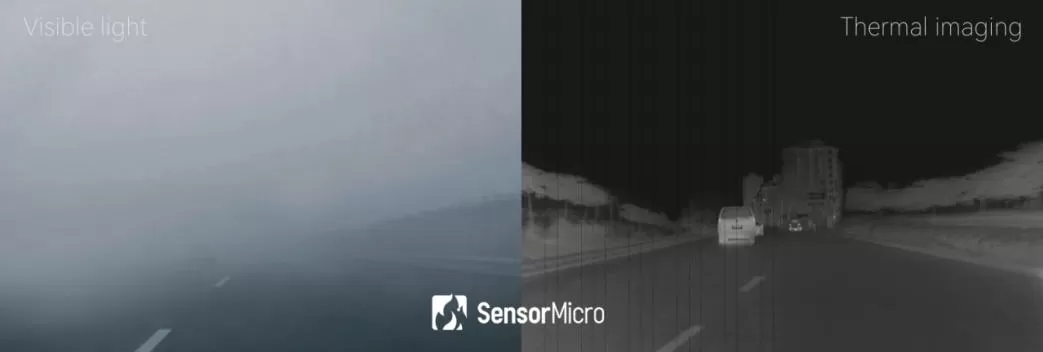
One study tested thermal cameras inside a professional fog simulation tunnel under meteorological visibility conditions ranging from 10 meters to 160 meters. Researchers found that visible imaging deteriorated rapidly in dense fog, while thermal cameras with narrow viewing angles could still maintain reliable pedestrian detection rates above 90% even when visibility dropped to only 13 meters.
That result explains why thermal imaging is increasingly used in advanced driver assistance systems, perimeter security, and rescue operations.
How Fog Affects Infrared Thermal Imaging
Although infrared imaging performs better than visible imaging, fog still affects thermal cameras in several ways.
The first problem is signal attenuation. Fog droplets absorb and scatter part of the infrared radiation before it reaches the detector. As fog becomes denser, less thermal energy reaches the camera, reducing image contrast.
The second problem is thermal blending. When environmental temperature becomes close to the target temperature, the difference between the target and the background becomes smaller. This makes object outlines harder to distinguish.
A 2024 study published in Scientific Reports compared thermal imaging performance in normal air, smoke, and fog under different environmental temperatures. It was observed a major difference between smoke and fog. Smoke caused relatively small thermal measurement errors, while fog produced much larger changes.
For example, when the ambient temperature increased from 20°C to 50°C, target temperature measurements in normal conditions increased gradually from about 31.77°C to 38.57°C. In smoke, the results were very similar. But in fog, measured target temperatures changed much more dramatically, rising from 25.53°C to 48.90°C.
This experiment revealed an important lesson: fog droplets themselves absorb environmental radiation and begin emitting infrared energy. In other words, the fog becomes part of the thermal scene. When this happens, the camera receives mixed infrared radiation from both the target and the fog layer.
A common failure case appears during warm and humid weather. If a person is standing in dense fog while the surrounding air temperature is already close to body temperature, the thermal contrast decreases significantly. The person may still be visible, but edges become softer and recognition becomes more difficult.
MWIR vs LWIR: Which Performs Better in Fog?
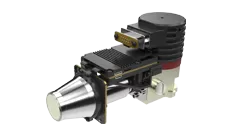
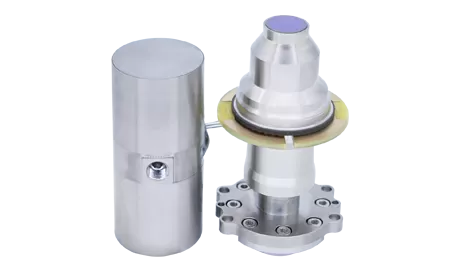
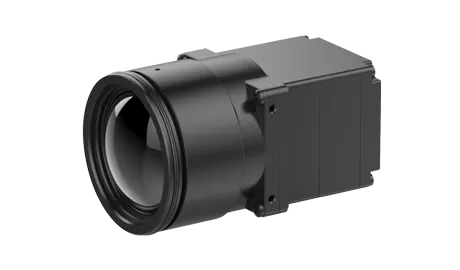
Infrared thermal imaging systems are mainly divided into mid-wave infrared (MWIR, 3–5 μm) and long-wave infrared (LWIR, 8–14μm). Their performance changes depending on the environment.
MWIR detectors usually produce sharper images and capture more target details in high-temperature, smoky, or foggy scenes. In rainy weather, dense fog, and humid environments, cooled MWIR thermal cameras often achieve longer detection distances and clearer target recognition than LWIR systems because they can preserve stronger thermal contrast.
However, MWIR is more sensitive to atmospheric interference. In dry, dusty, or sandy conditions, its detection range may decrease more noticeably.
LWIR detectors are generally more stable in dry air, sandstorms, and long-range outdoor monitoring. Long-wave infrared radiation is less affected by dust scattering, allowing LWIR systems to maintain more reliable imaging performance in desert or dusty environments.
In simple terms, MWIR is often better for humid, foggy, and high-temperature conditions, while LWIR is usually more suitable for dry, dusty, and long-range applications.
Infrared Thermal Imaging Extends Visibility in Fog
Infrared thermal imaging performs significantly better than visible-light cameras in fog because it detects heat radiation instead of reflected visible light. By detecting heat radiation instead of reflected light, thermal cameras can continue identifying people, vehicles, and heat sources even when fog significantly reduces normal visual perception. At the same time, environmental temperature, humidity, fog density, and infrared wavelength all influence final imaging performance. In practical applications, choosing the right infrared band is critical. MWIR thermal imaging is often more effective in humid, foggy, and high-temperature conditions, while LWIR systems provide more stable performance in dry, dusty, and long-range environments. As thermal imaging technology continues to improve, it is becoming an increasingly important solution for autonomous driving, firefighting, industrial inspection, and all-weather security monitoring.


 CN
CN
 EN
EN