As commercial space activities continue to expand, infrared technology has evolved far beyond its traditional role in thermal imaging. It is now becoming a critical enabling technology for satellite communications, spacecraft health management, ground terminal perception, and launch safety systems. By combining sensing, control, and communication capabilities, infrared systems are helping build a more reliable and intelligent commercial space infrastructure.
Today, infrared technology forms a comprehensive technical framework that spans the entire commercial space industry chain, from onboard satellite payloads to ground stations and launch facilities. Its core functions include thermal management, target recognition, communication assistance, and environmental perception, providing all-weather and high-precision situational awareness for modern space systems.
Infrared Technology in Inter-Satellite Laser Communication
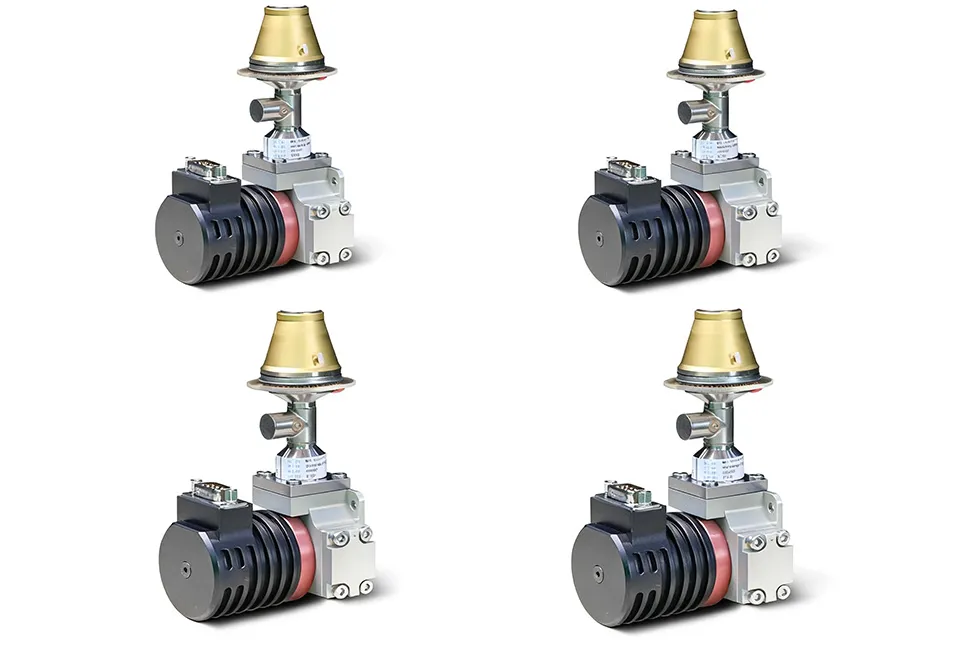
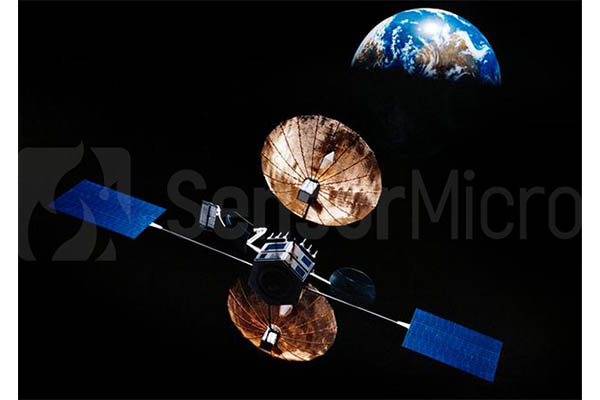
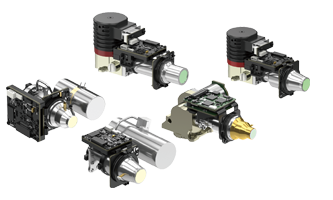
One of the fastest-growing applications of infrared technology is in laser communication acquisition, tracking, and pointing (APT) systems used for inter-satellite links. When two satellites establish a laser communication connection, the infrared detector first senses the thermal radiation emitted by the target satellite, including heat from engines, radiators, and other structural components. This allows the system to perform long-range initial acquisition and coarse tracking over a wide field of view before the laser beam is precisely aligned. By improving the speed and stability of link establishment, infrared-assisted APT systems have become an essential prerequisite for high-speed data transmission between satellites. As low Earth orbit constellations continue to grow, the importance of this technology will only increase.
Infrared Payloads for Earth Observation and Satellite Health Management
Infrared technology plays a central role in satellite payloads, particularly in Earth observation and spacecraft platform health management. For Earth observation missions, infrared detectors capture thermal radiation from the Earth's surface day and night, enabling continuous observation regardless of lighting conditions. These sensors support a wide range of applications, including weather forecasting, environmental monitoring, wildfire detection, disaster response, precision agriculture, and natural resource exploration. As commercial remote sensing satellites demand higher spatial resolution and wider imaging coverage, the performance of infrared detectors has become increasingly important.
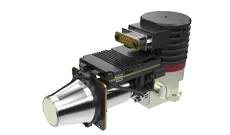
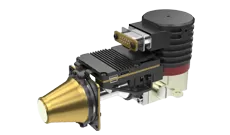
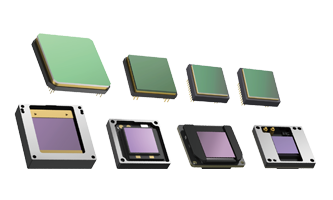
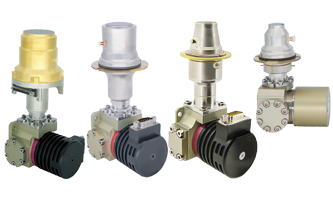
To address these requirements, SensorMicro's C2510H high operating temperature (HOT) cooled infrared detector provides a powerful imaging solution for next-generation Earth observation satellites. Featuring an ultra-large 2560 × 2048 resolution with a 10 μm pixel size, the C2510H delivers exceptional image detail while maintaining a compact detector architecture. Its high-resolution imaging capability makes it well suited for advanced remote sensing payloads that require precise thermal information over large observation areas, providing core hardware support for future high-resolution satellite imaging systems.
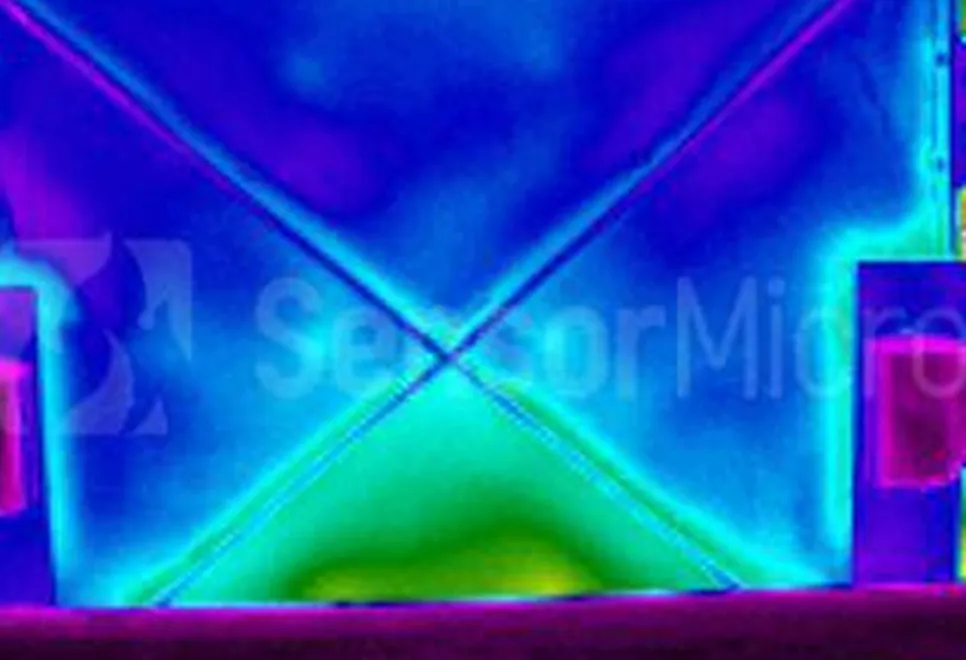
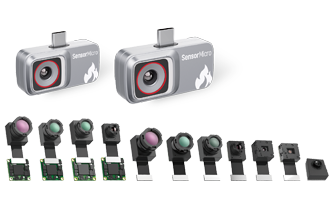
Beyond Earth observation, infrared technology also plays an essential role in satellite platform health management. Infrared thermal cameras and temperature sensors continuously monitor the thermal distribution of critical spacecraft components, including solar array hinges, propulsion systems, batteries, and phased-array antennas. By detecting abnormal temperature variations without physical contact, infrared systems help engineers evaluate thermal control performance, identify potential failures at an early stage, and ensure the long-term safety and reliability of satellite platforms.
Infrared Perception in Satellite-to-Ground Communication Terminals
In satellite-to-ground communication systems, infrared technology is increasingly used for environmental perception and decision support at ground terminals.
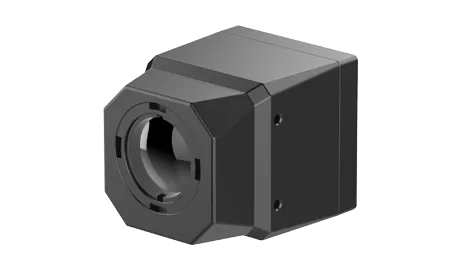
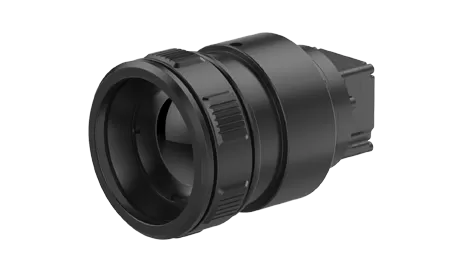
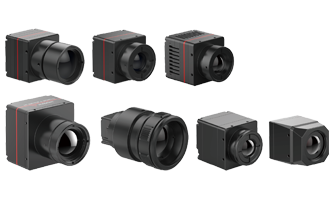
Infrared cameras integrated into vehicle-mounted, shipborne, or airborne satellite communication terminals provide night vision, obstacle detection, and surrounding situational awareness. By combining thermal sensing with satellite communication functions, operators can maintain reliable communications while navigating complex or low-visibility environments. This integration significantly improves operational capability during emergency response, maritime operations, and mobile communications deployments.
Ground Stations and Launch Sites: Infrared for Safety and Reliability
Beyond satellites themselves, infrared technology is becoming a vital safety tool for satellite ground stations and rocket launch facilities. At ground stations, thermal imaging systems inspect antennas, radio-frequency equipment, and power systems to identify overheating components before failures occur. Early detection of thermal anomalies helps ensure continuous communication reliability and reduces maintenance risks. At rocket launch sites, infrared monitoring is used to observe the rocket body, fueling systems, and launch tower structures. High-performance thermal imaging systems can detect temperature abnormalities in real time and provide critical data to launch operators. This additional layer of thermal awareness supports safer launch decisions and enhances mission assurance under demanding environmental conditions.
Emerging Trends in the Commercial Space Infrared Market
The commercial space infrared market is entering a period of rapid technological evolution driven by the expansion of satellite constellations and the demand for more intelligent space systems. One major trend is technology integration. Infrared sensing is increasingly being combined with microwave, optical, and laser communication technologies to create unified "sensing + communication" solutions that improve overall system performance. Another trend is miniaturization. Low Earth orbit satellites require components with reduced size, weight, and power consumption. As a result, compact and low-power infrared detectors are becoming increasingly attractive for commercial spacecraft and communication terminals.
The market is also benefiting from cost reduction. As manufacturing processes mature and production volumes increase, infrared detector costs are gradually declining, making the technology accessible to a broader range of commercial space applications. Finally, infrared applications are becoming more diverse. In addition to conventional thermal imaging and temperature monitoring, infrared technology is expanding into laser communication APT systems, space target recognition, space situational awareness, and other emerging aerospace applications.
The Future of Infrared Technology in Commercial Space
Infrared technology is rapidly becoming one of the foundational technologies of the commercial space era. Its ability to provide non-contact, real-time, and all-weather sensing makes it uniquely valuable for satellite communications, spacecraft operations, ground infrastructure, and launch safety. As satellite networks become larger and space missions become more complex, infrared systems will continue to evolve toward higher resolution, lower power consumption, greater intelligence, and deeper integration with communication and control technologies. This evolution will further strengthen the role of infrared sensing as a key enabler of reliable, efficient, and scalable commercial space operations. For companies developing next-generation satellite platforms, ground terminals, and space communication systems, infrared technology is no longer simply a thermal imaging tool—it is becoming a strategic component of the entire commercial space ecosystem.
Conclusion
Infrared technology has become far more than a traditional thermal imaging solution. Today, it serves as a core enabling technology for commercial space, supporting laser communication APT systems, high-resolution Earth observation, spacecraft thermal management, satellite-to-ground communication, and launch safety monitoring.
As commercial satellite constellations continue to expand, the demand for infrared detectors with higher resolution, lower power consumption, and greater reliability will continue to grow. Advanced solutions such as SensorMicro's C2510H HOT cooled infrared detector demonstrate how next-generation infrared technology can provide the imaging performance required for future space missions.
By combining high-performance infrared sensing with intelligent communication and control systems, commercial space companies will be able to build safer, smarter, and more efficient space infrastructures, accelerating the next generation of global connectivity and Earth observation.


 CN
CN
 EN
EN