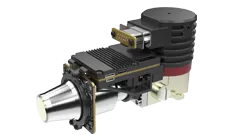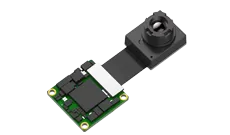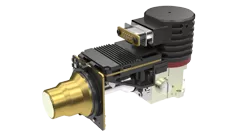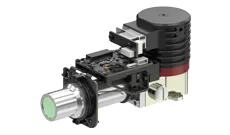
In infrared thermal imaging surveillance, industrial temperature measurement, perimeter security, forest fire prevention, and power inspection projects, the selection of infrared lens focal length and FOV (Field of View) angle directly determines the final imaging effect, target recognition rate, and temperature measurement accuracy. Many engineering sites commonly encounter issues such as: using a long focal length at close range results in a large blind zone in the field of view, using a wide angle at a distance results in targets being too small to see clearly, temperature measurement drift, AI false alarms, and coverage not meeting standards.
To select the right lens at once without repeated trial and error, the most direct and efficient way is to rely on the infrared lens focal length FOV scene selection comparison table, and quickly match parameters based on monitoring distance, coverage width, and usage scenario. This article compiles a complete version of the industry-wide selection comparison table, scenes suitable for different focal length FOVs, target surface matching rules, and engineering selection standards, which are suitable for direct implementation and application by security engineers, solution providers, procurement, and operation and maintenance personnel.
Detailed adaptation instructions for four major types of lens focal lengths, FOV, and scenarios
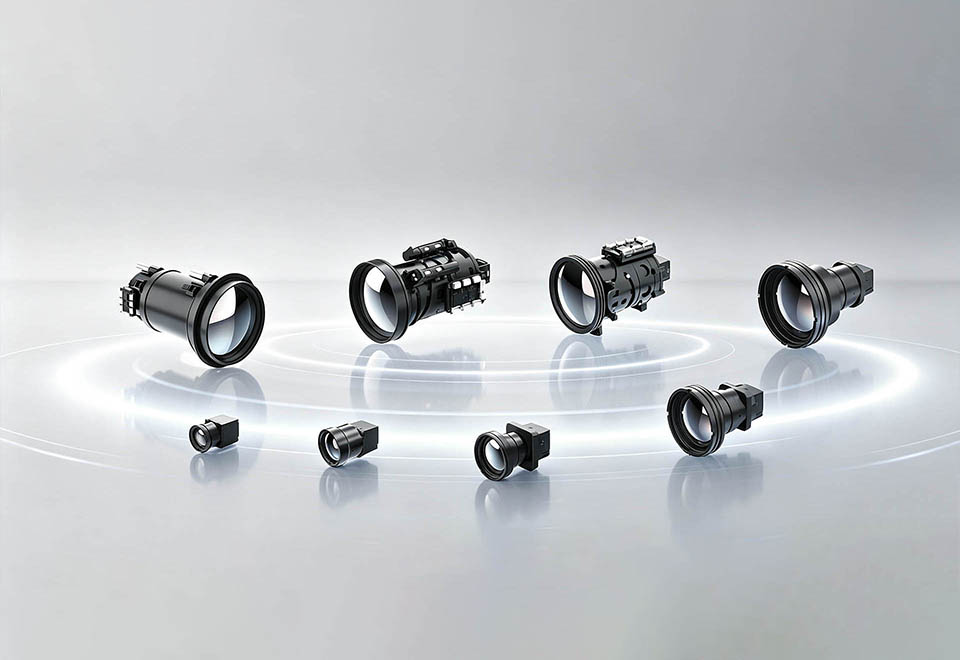
Infrared lenses can be categorized into four main types, each corresponding to different engineering scenarios. Selection does not require complex calculations; instead, it can be directly matched according to the specific scenario.
Wide-angle lens (3.6–6mm): dedicated for full coverage at close range
Wide-angle lenses feature a large field of view (FOV) and broad vision, making them ideal for short-range monitoring scenarios within 15 meters, capable of achieving full coverage without blind spots. They are primarily used in indoor computer rooms, clusters of distribution cabinets, workshop assembly lines, and security in corners of residential areas. The disadvantage of this type of lens is that it lacks sufficient magnification for long distances. Beyond 15 meters, the target pixels of human bodies and heat sources become too small, leading to potential issues such as inaccurate temperature measurement and missed AI recognition, making it unsuitable for outdoor long-distance security.
Standard lens (8–12mm): the first choice for cost-effective performance in general scenes
Standard focal length lenses, which balance field of view and detection distance, are the most widely used specifications in industrial and civilian projects. With an optimal monitoring range of 10-40 meters, they perfectly suit most conventional scenarios such as parks, warehouses, factories, corridors, and small and medium-sized substations. They not only ensure surveillance coverage but also clearly identify intruders and equipment heat spots, offering the strongest comprehensive adaptability.
Medium-to-long focal length lens (16–25mm): Precise monitoring at medium to long distances
The medium and long focal length lens features a narrowed field of view (FOV) and enhanced telephoto capability, focusing on precise detection at medium and long distances, suitable for point locations ranging from 40 to 80 meters. It is commonly used in scenarios such as perimeter fencing in factory areas, fixed-point temperature measurement of electrical equipment, road security, and outdoor equipment inspection. It can accurately capture remote personnel intrusion and potential local high temperatures in equipment, making it a core choice for industrial security and power inspection.
Telephoto/ultra-telephoto lens (35–50mm): ultra-long-distance observation and detection
Long-focal-length lenses feature a narrow field of view and extremely high magnification, primarily targeting long-range detection at distances of up to 100 meters. They offer a focused view, clear details, and strong resistance to environmental interference. These lenses are primarily used in large-scale and long-distance scenarios such as forest fire prevention, border security, high-altitude observation, temperature measurement of long-distance power transmission lines, and security in large mining areas. However, their disadvantage is that they have a narrow coverage width, making them suitable only for targeted and key monitoring, rather than full-area coverage.


 CN
CN
 EN
EN