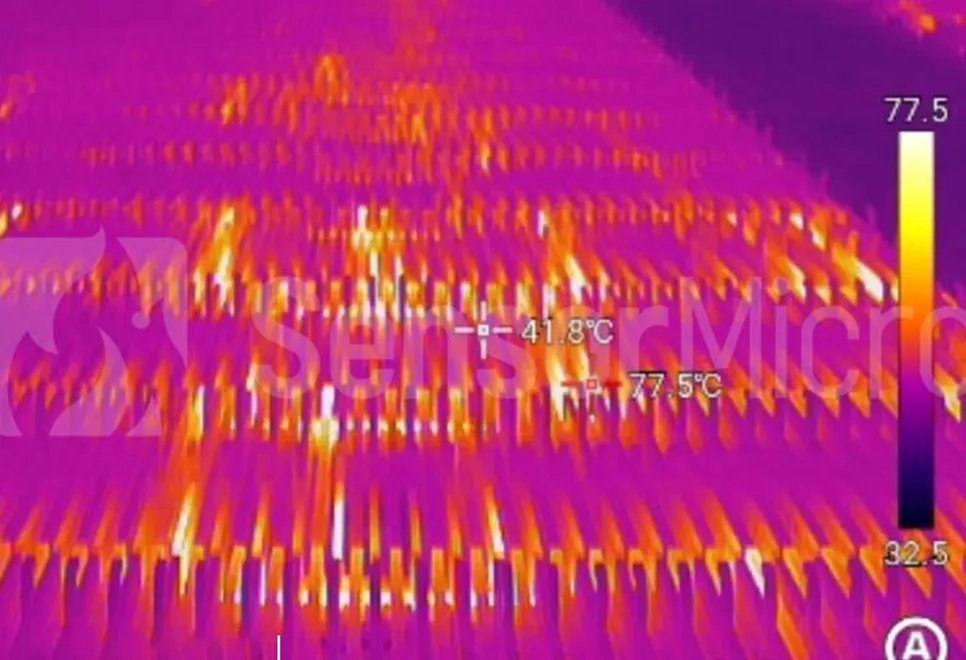
The Evolution of Infrared Detector Pixel Pitch: From 25 μm to 8 μm and Beyond
The development of infrared detector technology shows a clear trend toward smaller pixel pitches. Earlier infrared detectors commonly used pixel pitches such as 25 μm and 17 μm. As semiconductor manufacturing and detector technology advanced, 12 μm and 10 μm solutions became increasingly widespread. The emergence of 8 μm-class infrared detectors represents another important step toward higher pixel density and more compact thermal imaging systems.
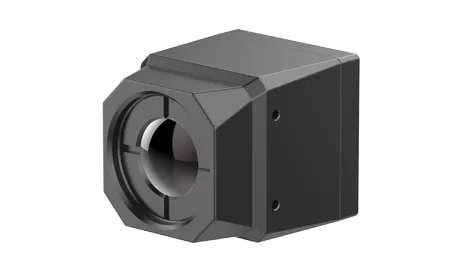
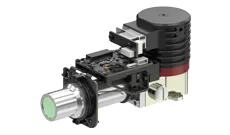
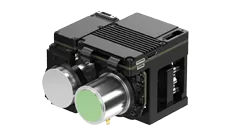
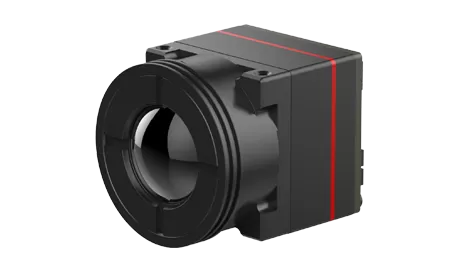
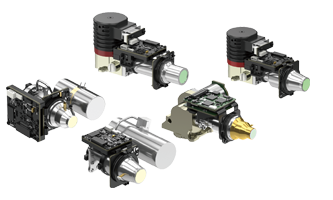
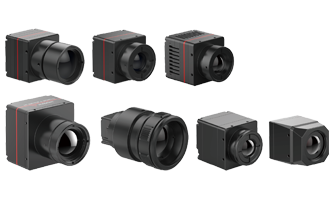
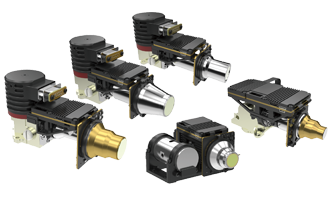
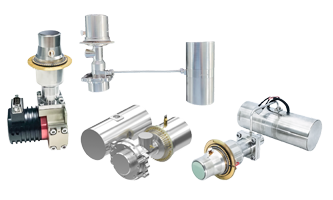
For example, SensorMicro's uncooled infrared detector technology has reached an 8 μm minimum pixel pitch, supporting the industry's continuing transition toward smaller and more compact detector architectures. At the same time, SensorMicro has established the capability to provide infrared optical solutions with 12 μm and larger specifications in volume. The combination of advanced detector technology and appropriately matched infrared optics is particularly important for applications that require high resolution while maintaining a compact system footprint.
Pixel Pitch and Spatial Resolution in Thermal Imaging
One of the most important reasons to use a smaller pixel pitch is its potential to improve spatial resolution. Spatial resolution describes the ability of an imaging system to distinguish small details or closely spaced objects. Consider two infrared cameras observing the same target from the same distance. If the optical system is appropriately matched to the detector, a smaller pixel pitch can provide finer spatial sampling and allow the system to capture more detail. This is especially useful when the target itself is relatively small.
For example, in industrial inspection, a small defect may occupy only a few pixels in a thermal image. Increasing the number of pixels covering that defect can make it easier to identify and analyze. In long-range observation, higher pixel density can also help the imaging system detect and recognize smaller targets at greater distances.
However, this is where an important distinction should be made between detection range, recognition range, and identification range. A smaller pixel does not automatically guarantee a longer detection distance. The actual performance depends on the entire imaging chain, including detector sensitivity, lens focal length, aperture, atmospheric transmission, target temperature contrast, and image-processing algorithms.
Why Infrared Optics Must Match the Detector Pixel Pitch
A high-performance infrared detector cannot reach its full potential without a properly matched infrared optical system. This is particularly important as pixel pitch continues to decrease. The lens must be designed according to the detector's pixel pitch, resolution, focal length, field of view, aperture, and other system parameters. If the optical system is poorly matched to the detector, increasing the detector resolution may not result in a corresponding improvement in image quality.
For example, installing a high-resolution small-pixel detector behind an optical system with insufficient resolving capability can result in the lens becoming the limiting factor. Conversely, an extremely high-performance infrared lens may not deliver its full value if the detector does not provide sufficient spatial sampling.
This leads to a fundamental principle of thermal imaging system design: The infrared detector and infrared lens must be precisely matched to achieve the best possible imaging performance.
4. 8 μm, 12 μm, or 17 μm: Which Pixel Pitch Should You Choose?
There is no universal answer. The right pixel pitch depends on the application, target size, observation distance, field of view, lens design, system dimensions, sensitivity requirements, and overall budget.
An 8 μm detector can be highly attractive when compactness, high pixel density, and fine spatial sampling are priorities. A 12 μm detector can provide an excellent balance between resolution, optical design, system size, and performance, making it suitable for a broad range of modern thermal imaging applications. A 17 μm detector may still be advantageous when larger pixel area, optical design flexibility, or specific system-level performance requirements are more important than maximum pixel density. Therefore, choosing a detector should not be reduced to the question of which pixel pitch is smallest. The better question is: Which detector and optical combination provides the required imaging performance for the application?
Pixel Pitch is Only One Part of Infrared Detector Performance
When evaluating an infrared focal plane detector, pixel pitch is certainly an important specification, but it should always be considered alongside other parameters. Resolution, NETD, spectral response, frame rate, dynamic range, pixel operability, uniformity, detector format, power consumption, and optical compatibility all contribute to real-world thermal imaging performance. For example, a small-pixel detector with excellent spatial resolution may not deliver the expected image quality if its sensitivity is insufficient for the target scene. Likewise, a high-resolution detector may not provide a meaningful system-level advantage if the infrared lens cannot resolve the corresponding spatial details. This is why modern infrared imaging development increasingly focuses on system-level optimization rather than individual specifications.
The Future of Infrared Pixel Technology
As infrared imaging continues to expand into aerospace, security, industrial inspection, robotics, autonomous systems, consumer electronics, and other applications, the demand for smaller and more capable detectors will continue to grow. Smaller pixel pitches are expected to remain an important technology direction. However, future progress will not simply be measured by how small a pixel can become. The key challenge will be maintaining or improving sensitivity, signal-to-noise ratio, pixel uniformity, optical compatibility, manufacturing yield, and system reliability while reducing pixel size.
At the same time, the development of advanced infrared optics will become increasingly important. Smaller pixels require optical systems capable of delivering sufficient resolution and efficiently coupling infrared radiation onto the detector. This means the future of infrared imaging will depend on the coordinated development of detectors, ROICs, infrared optics, cooling or thermal management, and image-processing algorithms. Ultimately, the evolution from 25 μm to 17 μm, 12 μm, 10 μm, and 8 μm is not simply a story of making infrared pixels smaller. It reflects a broader shift toward higher resolution, smaller system footprints, better SWaP, and more optimized infrared imaging systems.


 CN
CN
 EN
EN