Infrared thermal imaging has become an essential technology for detecting temperature differences that are invisible to the naked eye. At the same time, Augmented Reality (AR) is reshaping the way people interact with digital information by overlaying virtual content onto the real world. When these two advanced technologies are combined, they create a powerful solution that significantly improves real-time visualization, decision-making, and operational efficiency. The integration of infrared thermal imaging with augmented reality enables users to view thermal information directly on physical objects, eliminating the need to interpret separate thermal images and greatly enhancing situational awareness. From industrial maintenance and medical diagnostics to building inspections and technical training, AR-assisted thermal imaging is opening new possibilities across a wide range of industries.
Why Combine Infrared Thermal Imaging with Augmented Reality?
Traditional thermal cameras provide valuable temperature data, but users often need to compare thermal images with the actual environment, which can slow down inspections and increase the chance of misinterpretation. Augmented Reality solves this challenge by overlaying thermal images onto a live view of the real world. Whether displayed through AR smart glasses, tablets, smartphones, or wearable devices, thermal information appears exactly where it is needed. Users can instantly identify abnormal heat patterns, understand their locations, and make faster, more informed decisions. This seamless integration creates a more intuitive workflow while improving inspection accuracy and reducing operational complexity.
Industrial Maintenance: Faster Fault Detection and Reduced Downtime
One of the most valuable applications of AR thermal imaging is predictive maintenance in industrial environments. Manufacturing facilities, power plants, and production lines rely heavily on continuous equipment operation. Overheating electrical components, mechanical friction, loose connections, or fluid leaks often produce temperature anomalies long before equipment failure occurs. With augmented reality, maintenance engineers can visualize these thermal anomalies directly on machinery instead of switching between a thermal camera display and the physical equipment. This real-time overlay enables technicians to quickly locate overheating motors, electrical faults, pipeline leaks, or worn mechanical parts. The result is faster troubleshooting, shorter maintenance cycles, lower operational costs, and significantly reduced equipment downtime.
Enhancing Medical Diagnostics with AR Thermal Imaging
Medical infrared thermal imaging is widely recognized as a safe, non-contact, and radiation-free method for evaluating physiological changes in the human body. By integrating thermal imaging with augmented reality, healthcare professionals gain an even more intuitive way to assess patients. Using AR glasses or mobile devices, clinicians can observe thermal maps superimposed directly onto a patient's body. This visualization helps identify temperature asymmetry associated with inflammation, poor blood circulation, nerve disorders, musculoskeletal injuries, or other physiological abnormalities. Rather than replacing conventional medical imaging techniques, AR-enhanced thermal imaging serves as a valuable complementary tool for health screening, rehabilitation assessment, pain evaluation, and disease monitoring. It also improves communication between physicians and patients by making thermal information easier to understand.
Smarter Building Inspection and Energy Audits
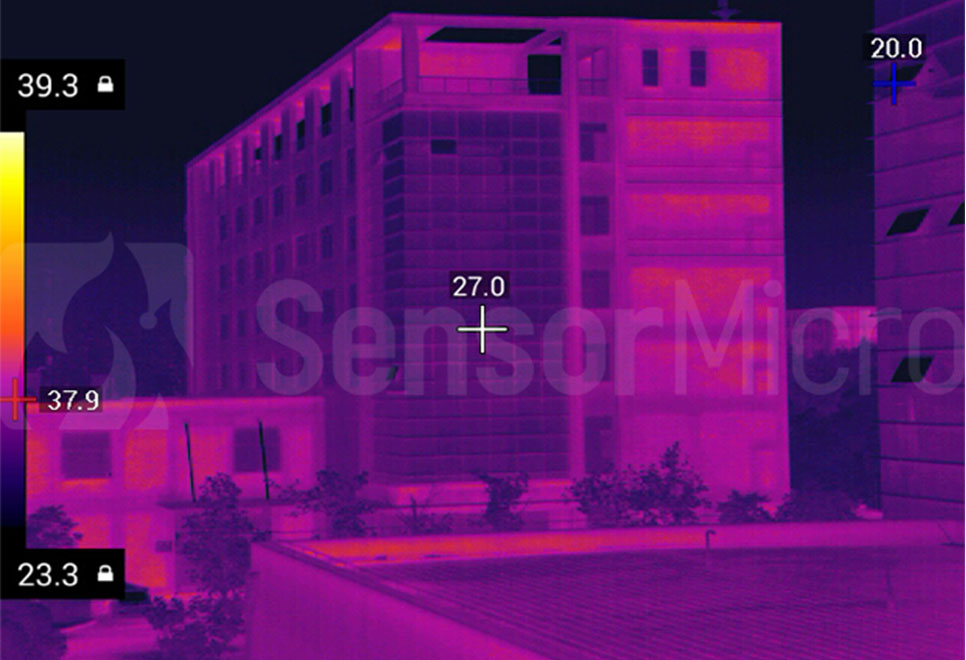
Building inspection is another area where infrared thermal imaging and augmented reality work exceptionally well together. Inspectors traditionally capture thermal images and later compare them with building structures to identify defects. AR simplifies this process by projecting thermal data directly onto walls, ceilings, roofs, windows, or electrical systems during the inspection. This real-time visualization allows inspectors to quickly identify insulation deficiencies, moisture intrusion, hidden water leaks, air leakage, or electrical overheating without repeatedly switching between different displays. The combination of AR and thermal imaging not only improves inspection accuracy but also accelerates reporting and maintenance planning, making it an ideal solution for construction companies, facility managers, and energy auditors.
Improving Technical Training and Education
Beyond inspection and diagnostics, AR-assisted thermal imaging has become an effective educational tool. Traditional thermal imaging training often relies on static images or theoretical explanations. With augmented reality, trainees can interact with real-world equipment while simultaneously observing live thermal information. This immersive learning experience helps students and technicians better understand heat transfer, equipment behavior, electrical systems, and thermal anomaly recognition. The interactive environment also improves knowledge retention and prepares learners for real-world applications more efficiently than conventional classroom instruction. As industries continue to adopt advanced thermal technologies, AR-based training is expected to play an increasingly important role in workforce development.
The Future of Infrared Thermal Imaging and Augmented Reality
Both infrared imaging technology and augmented reality continue to evolve rapidly. Modern infrared detectors offer higher thermal sensitivity, greater image resolution, and faster processing speeds than ever before. At the same time, AR hardware is becoming lighter, more comfortable, and more affordable for everyday industrial and professional use. Artificial intelligence is expected to further enhance this integration by automatically recognizing thermal anomalies, identifying equipment types, analyzing temperature trends, and providing intelligent maintenance recommendations in real time. Combined with cloud computing and the Industrial Internet of Things, AR thermal imaging systems will enable remote collaboration, predictive maintenance, and centralized asset management across multiple locations. As these technologies mature, the integration of thermal imaging, AR, AI, and digital twins will become an important component of Industry 4.0, smart healthcare, intelligent infrastructure, and future smart cities.
Conclusion
The integration of infrared thermal imaging with augmented reality is transforming the way thermal data is collected, visualized, and interpreted. By overlaying real-time temperature information directly onto the physical environment, this technology significantly improves situational awareness, inspection efficiency, and diagnostic accuracy across numerous industries. Whether applied to industrial maintenance, medical diagnostics, building inspection, or technical education, AR-assisted thermal imaging enables users to identify problems faster, make better decisions, and streamline complex workflows. As infrared imaging technology, augmented reality, and artificial intelligence continue to advance, their combined capabilities will unlock even more innovative applications, making intelligent thermal visualization an essential tool for the future of modern industry and healthcare.


 CN
CN
 EN
EN