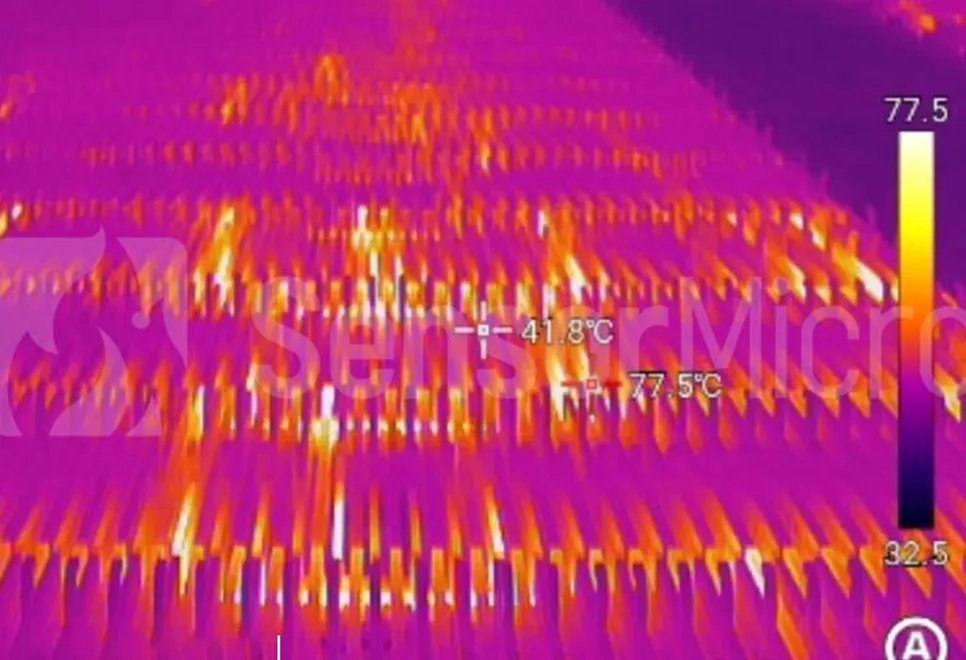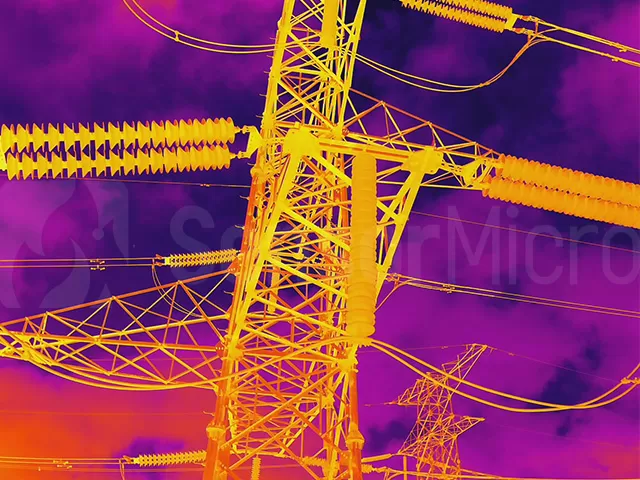
Why Preventive Maintenance Needs Thermal Imaging
Unexpected equipment failure is one of the biggest challenges in industrial operations. A loose electrical connection, an overloaded circuit, a worn bearing, or a damaged insulation layer can gradually develop into a serious fault. The problem is that most of these failures begin long before any visible signs appear.
Infrared thermal imaging helps maintenance teams identify these hidden issues by detecting abnormal heat patterns. Because heat is often the first symptom of equipment degradation, thermal cameras can reveal developing faults while machines are still operating normally.
This makes infrared thermal imaging one of the most effective tools for preventive maintenance. Instead of waiting for a breakdown, maintenance personnel can detect problems early, schedule repairs, and avoid costly downtime.
Studies of electrical and industrial maintenance programs show that equipment included in preventive maintenance schedules experiences significantly fewer failures than equipment maintained only after breakdowns. Some industry reports indicate that maintenance costs can be reduced by 30–40% when thermal inspections are integrated into predictive and preventive maintenance programs.
How Infrared Thermal Imaging Works
Every object above absolute zero emits infrared radiation. A thermal camera converts this radiation into a visual image that displays temperature differences across a surface.
When equipment operates normally, it usually produces a stable and repeatable thermal pattern. If a component begins to deteriorate, excess heat often appears before any visible damage occurs.
For example, a loose electrical connection creates additional resistance. The increased resistance generates heat, causing the connection point to appear hotter than surrounding components. Similarly, insufficient lubrication in a motor bearing increases friction, producing a localized hot spot.
By comparing thermal images over time, maintenance teams can identify temperature trends and determine whether a component is moving toward failure.
Unlike traditional contact thermometers, thermal imaging can inspect large areas quickly without shutting down equipment, making it suitable for routine inspections in active facilities.
Common Problems Thermal Cameras Can Detect
In industrial environments, thermal imaging is widely used to inspect electrical systems, rotating machinery, process equipment, and building infrastructure.
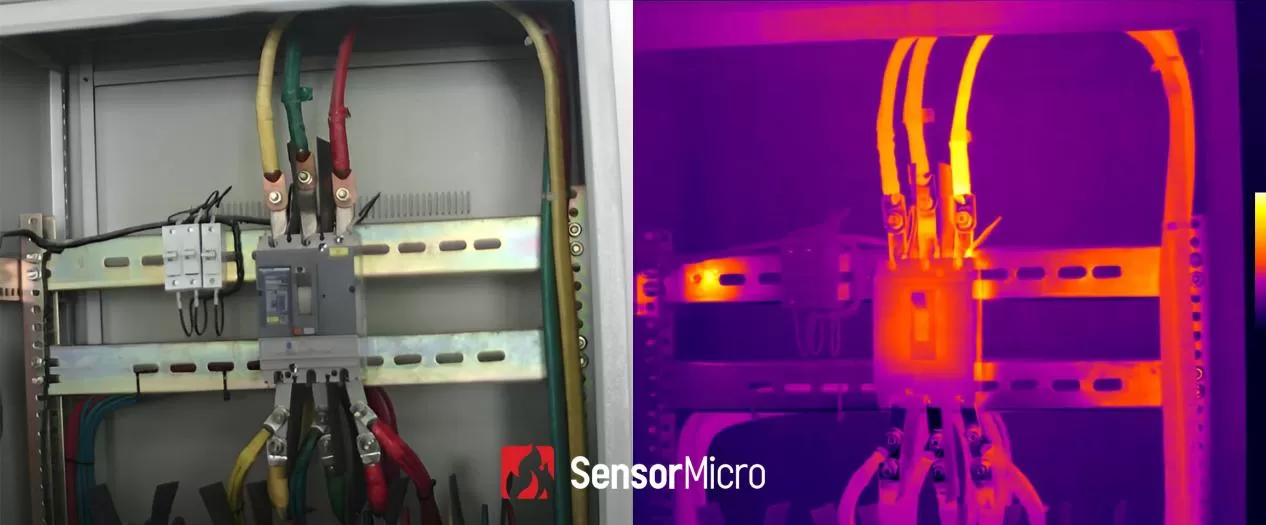
Electrical panels are among the most common inspection targets. Overheated breakers, loose terminals, overloaded circuits, and deteriorating connections often generate abnormal heat signatures long before failure occurs.
Rotating equipment such as motors, pumps, fans, and gearboxes can also benefit from thermal monitoring. Excess friction, misalignment, and bearing wear frequently create temperature increases that are easy to identify with a thermal camera.
Thermal imaging is equally valuable for detecting insulation defects, steam leaks, refractory damage, and heat loss in industrial processes.
A practical comparison illustrates the advantage. During a visual inspection, an electrical cabinet may appear completely normal. However, a thermal image can reveal a connection operating 20°C to 40°C hotter than adjacent components. While the cabinet continues functioning, the excessive heat indicates a developing fault that could eventually cause equipment damage or even fire if left untreated.
Preventive Maintenance vs. Reactive Maintenance
Many facilities still rely heavily on reactive maintenance. In this approach, equipment is repaired only after a failure occurs.
Although reactive maintenance may appear less expensive in the short term, it often leads to higher overall costs. Emergency repairs usually require unplanned shutdowns, overtime labor, replacement parts, and production losses.
Preventive maintenance takes a different approach. Equipment is inspected regularly, and repairs are scheduled before failures occur. Thermal imaging strengthens this strategy by providing objective temperature data that helps maintenance teams prioritize repairs.
A common failure scenario demonstrates the difference. An overheating electrical connection inside a production facility may remain unnoticed for months. Eventually, the connection fails, causing a production shutdown that lasts several hours. The cost of lost production often exceeds the cost of the repair itself.
By contrast, a routine thermal inspection can identify the hot connection weeks or months earlier. The repair can then be completed during scheduled maintenance, avoiding both downtime and emergency expenses.
Industry analyses have shown that unplanned failures often cost several times more than planned maintenance activities, highlighting the financial value of early fault detection.
Thermal Imaging Applications Across Industries
The use of thermal imaging for preventive maintenance extends far beyond factories.
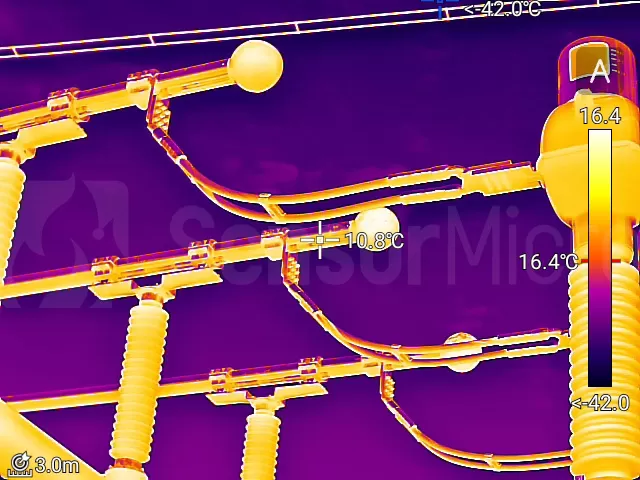
In power utilities, thermal inspections help identify overheating transformers, switchgear, circuit breakers, and transmission components before outages occur. Routine thermal surveys are widely used to improve grid reliability.
In wind energy systems, thermal imaging supports inspections of generators, electrical cabinets, blade structures, and drivetrain components. Maintenance costs can represent 20–25% of the lifetime electricity production cost of a wind turbine, making early fault detection especially valuable.
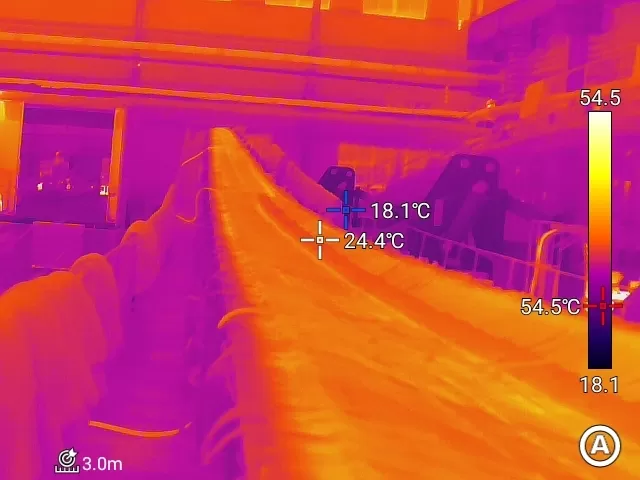
Manufacturing facilities use thermal cameras to monitor motors, conveyor systems, pumps, compressors, and process equipment. Even small temperature abnormalities can indicate developing mechanical problems.
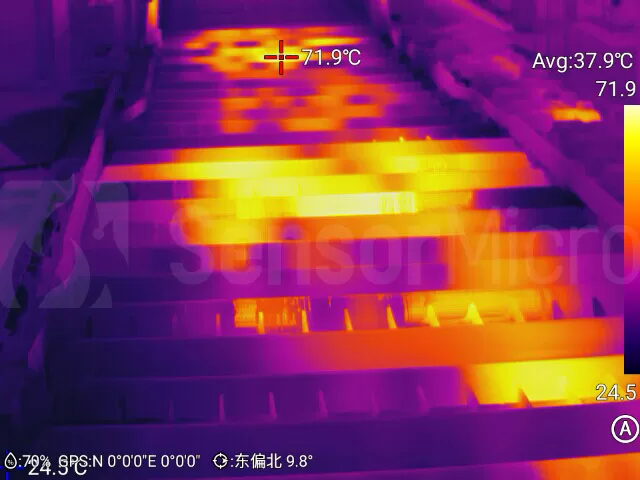
Commercial buildings also benefit from thermal inspections. HVAC systems, electrical infrastructure, insulation performance, and moisture intrusion can all be evaluated using thermal imaging technology.
Across these industries, the core principle remains the same: identify abnormal heat before it becomes a failure.
Why Thermal Imaging is Essential for Preventive Maintenance
Infrared thermal imaging allows maintenance teams to see heat-related problems before they become equipment failures.
By identifying abnormal temperature patterns in electrical systems, mechanical equipment, and industrial infrastructure, thermal cameras help reduce unplanned downtime, improve safety, and lower maintenance costs.
The greatest advantage of thermal imaging is not simply finding faults—it is finding them early enough to take action. A loose connection, worn bearing, or damaged insulation may appear insignificant today, but these small issues often become tomorrow's expensive breakdowns.
For facilities seeking higher reliability and more efficient maintenance programs, thermal imaging has become one of the most practical and proven technologies available.


 CN
CN
 EN
EN